Travel journal
Of Ghosts, Guards and Grab Taxis
22 October 2025
For six days, Jolene had existed only as a WhatsApp avatar, our ever-cheerful fixer who booked everything from the puppet show to the Ha Long Bay cruise and the cooking class. She replied at lightning speed to every anxious message, so we were fairly sure she was either superhuman or powered by ChatGPT. Then, on our final morning in Hanoi, she appeared in person. Real, smiling, and slightly shorter than expected. Dana practically squealed and handed her a box of Walker’s shortbread as a thank-you for proving she actually existed.
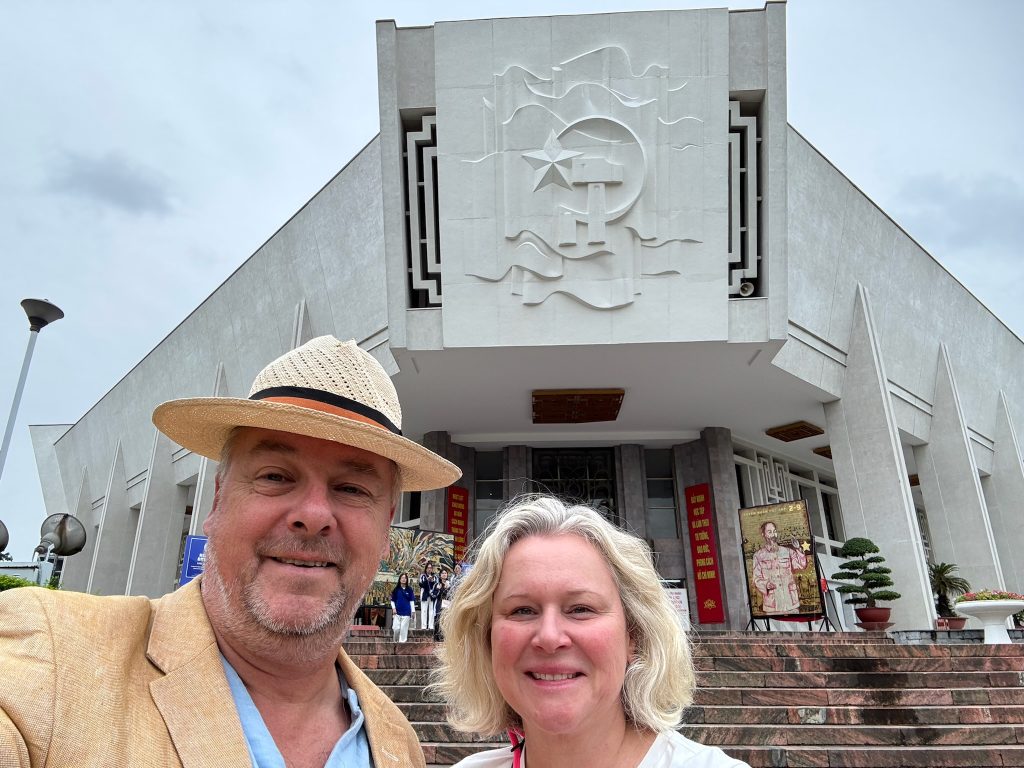
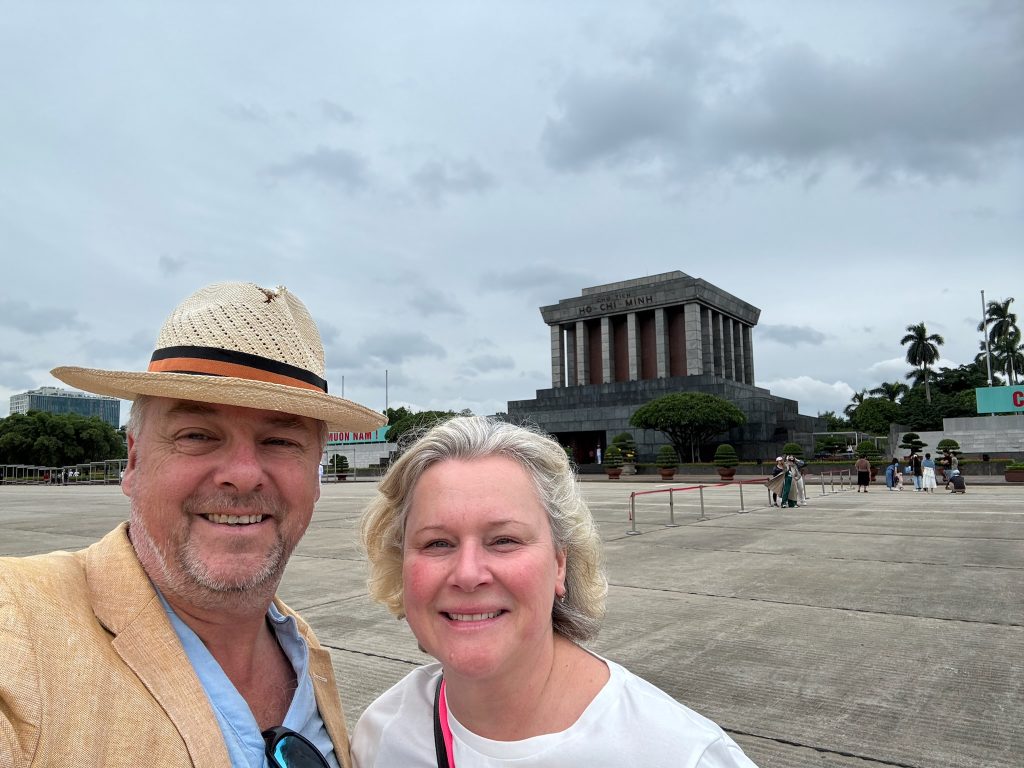
Then came the day’s main event L, our long-awaited visit to Ho Chi Minh’s Mausoleum.
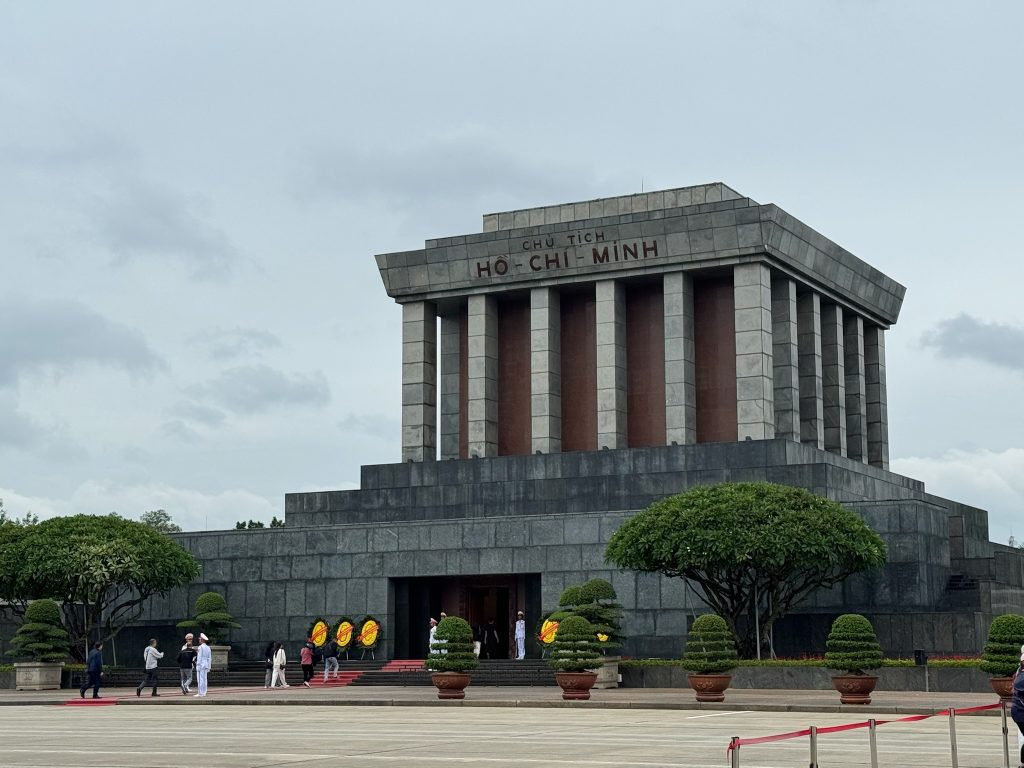
We summoned a Grab taxi (the app that every local swears by), which zipped us three kilometres across town for the princely sum of £1.20. Bryan, feeling confident with Google Maps, announced he’d found the perfect drop-off spot. Naturally, it was the back entrance.
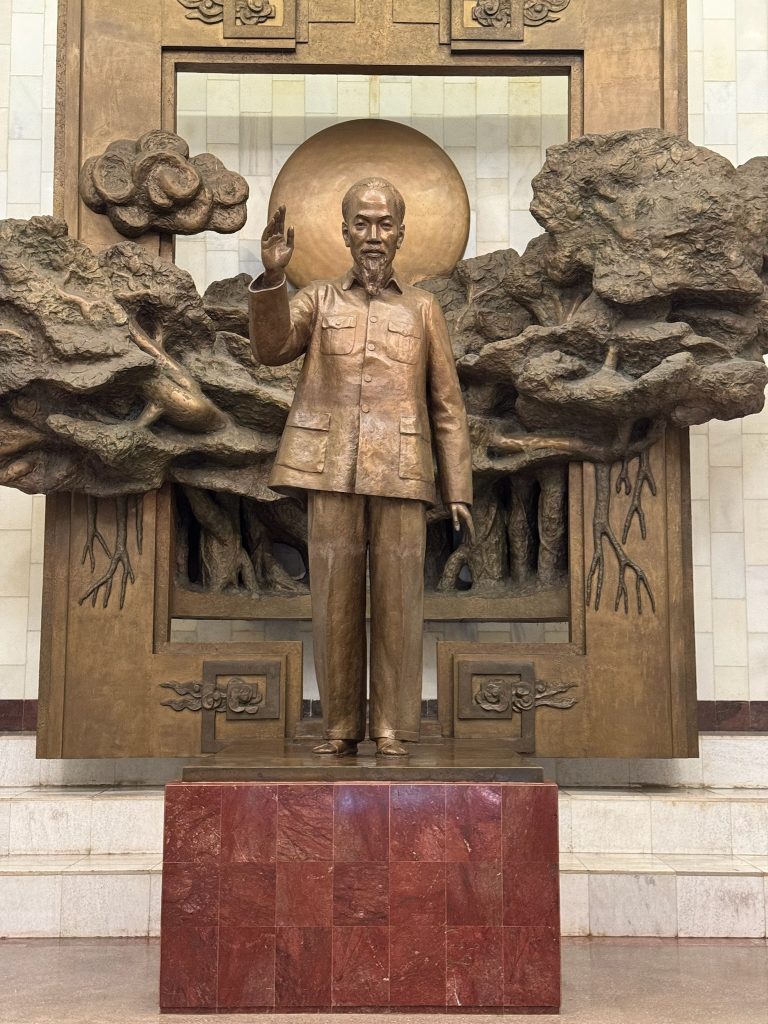
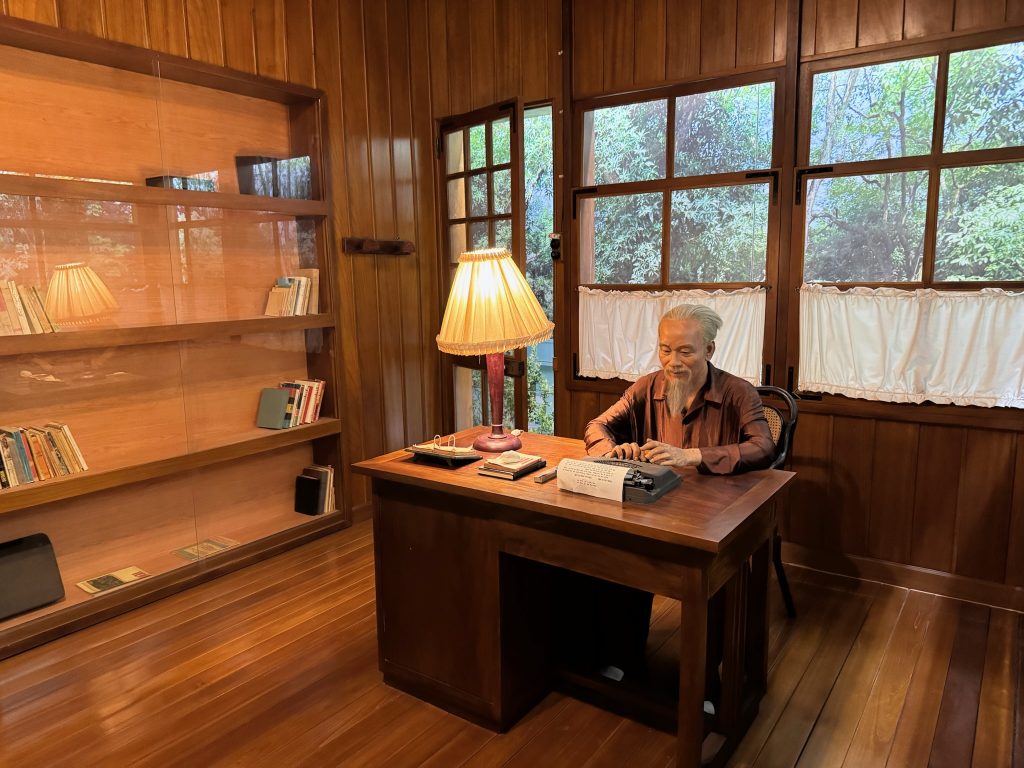
At first, we thought it might not matter, a gate’s a gate, right? Wrong. We somehow ended up in the museum, wandering through exhibits of Ho Chi Minh’s personal sandals and old typewriters, before realising we weren’t anywhere near the actual Mausoleum. A guard blew a whistle at us like we were errant schoolchildren, waving his arm in the universal signal for turn around, clueless tourists.
What followed was twenty minutes of pure farce. Every time we thought we were on the right path, another uniformed guard appeared, whistle at the ready, sending us scurrying back the way we came. The signs were absolutely useless, endless “Do Not Enter” notices, but not a single one saying “This Way to the Dead Guy.” We were like two characters in a Benny Hill sketch, looping through courtyards, bumping into the same group of bewildered tourists, and at one point accidentally joining a line of schoolchildren who were clearly in the right place.
Our hands and feet had swollen in the heat, Dana’s patience was wilting, and Bryan was beginning to mutter that Uncle Ho might just have to wait until next time. Finally, after another wrong turn and more marching under the watchful gaze of stone-faced guards, we reached the front, just fifty metres from where we’d originally been dropped off. Fifty metres. We could have thrown a spring roll that far.
Then came the hush. All chatter evaporated as we joined the slow-moving queue towards the Mausoleum itself. The path was flanked by immaculate gardens and stern soldiers in brilliant white uniforms, every crease knife-sharp. The sun blazed, but the closer we got, the quieter it became, as though the whole crowd knew they were stepping into something sacred.
Up the marble steps we went, into the cool, dim air of the chamber. The red carpet absorbed our footsteps, and no one dared speak. Guards stood like statues at each corner, eyes fixed ahead. Then we turned a corner and there he was.
Ho Chi Minh himself.
Lying in a glass case, bathed in a soft amber light, he looked eerily peaceful, as if he’d just drifted off to sleep. His beard perfectly trimmed, his skin pale but intact, his hands resting gently by his sides. There was something both surreal and deeply moving about it. You read about these things, Lenin, Mao, Kim, but seeing one of them in person is another experience entirely. The man who had shaped a nation, preserved for fifty-six years, despite asking to be cremated.
Dana whispered, barely audible, “He looks so small.” And he did. Fragile, almost delicate. Whatever grandeur surrounded him outside, the soldiers, the marble, the symbolism, inside, he seemed human again. A teacher turned revolutionary, turned reluctant icon.
The whole experience took less than a minute. The guards ushered us along briskly, no stopping, no photos, no lingering. And then, just like that, we were back in the bright sunlight, blinking, quiet, and oddly contemplative.
Bryan finally exhaled and said, “Well, he certainly doesn’t look like a man who’s been gone since 1969.” Dana raised an eyebrow. “He looks better than some of the men in our hotel lobby.”
We both burst out laughing, partly from nerves, partly from relief, and decided we’d earned a strong Vietnamese coffee after that.
As we sipped our drinks later, the whole Benny Hill chase around the compound already felt comical, but inside that chamber, it had been something else entirely, stillness, reverence, and a rare reminder that history, for all its noise, often ends in quiet.
We hailed another Grab — this time the tiniest car in Vietnam, half taxi, half sardine tin. The driver darted between mopeds like a wasp in a jam jar, performing a blind U-turn into a swarm of oncoming traffic. Dana gasped, Bryan closed his eyes, and the driver just laughed.
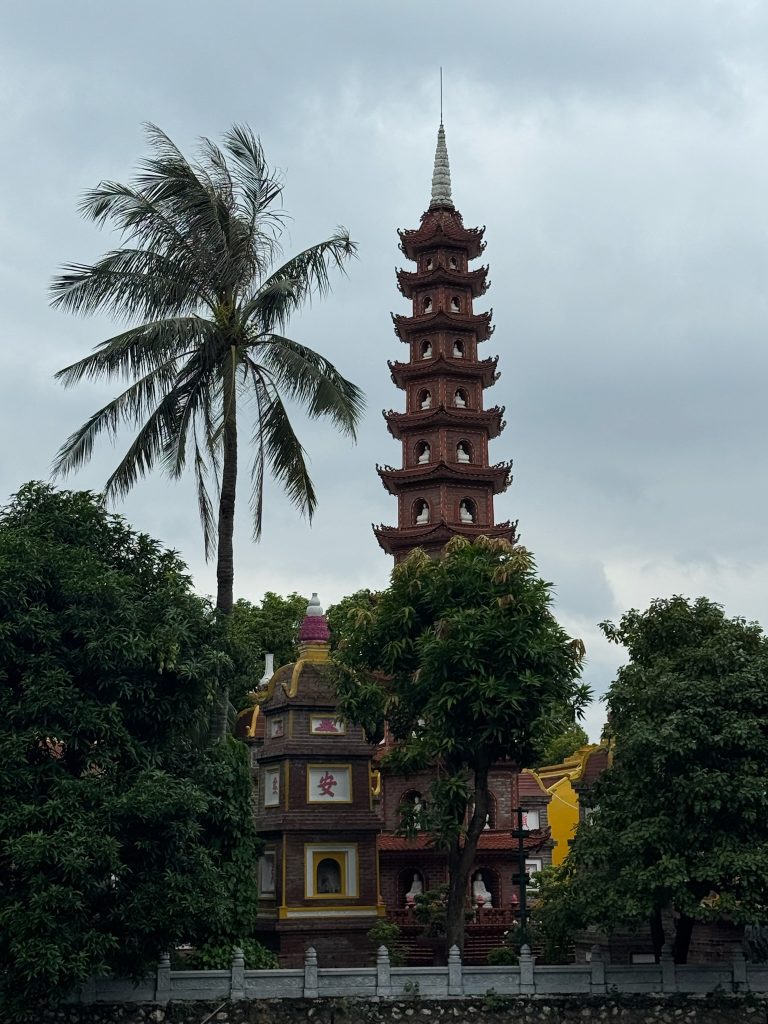
Next stop: Chùa Trấn Quốc Pagoda. We arrived at 11:05, exactly five minutes after it closed for its midday break until 1:30. Typical. We took some photos from the bridge, admired the (modest) pagoda, and tried not to think about the glossy online photos that had clearly been taken from a very flattering angle.
One final Grab whisked us to Hỏa Lò Prison, once used by the French to lock up Vietnamese revolutionaries and later by the Americans, who called it the “Hanoi Hilton.” The French section was full of shackles and a guillotine, the American section full of smiling prisoners playing chess. History, as ever, depends on who’s telling it.
By the end of the day, our step count was impressive, our sense of direction humbling, and our legs resembling over-boiled sausages. But as we collapsed into our airport seats bound for Phu Quoc, we agreed: finding the Mausoleum might have been the most ridiculous, and the most unforgettable, adventure yet.
After all, not everyone can say they spent their morning lost in a real-life Benny Hill sketch with a communist icon at the finish line.