Travel journal
Lost in Translation
17 July 2026
A Medieval Castle, a French Guide and the Unexpected Brilliance of Artificial Intelligence
Some places make you slow down before you've even arrived.
Château de Boussac was one of them.
We'd been meandering through the quiet roads of the Creuse, past sleepy villages where time seemed to have politely excused itself sometime around 1953. Fields of sunflowers nodded lazily in the sunshine, the occasional tractor ambled past without the slightest urgency, and every village church looked as though it had been waiting patiently for visitors for the last eight hundred years.
Then, almost without warning, the castle appeared.
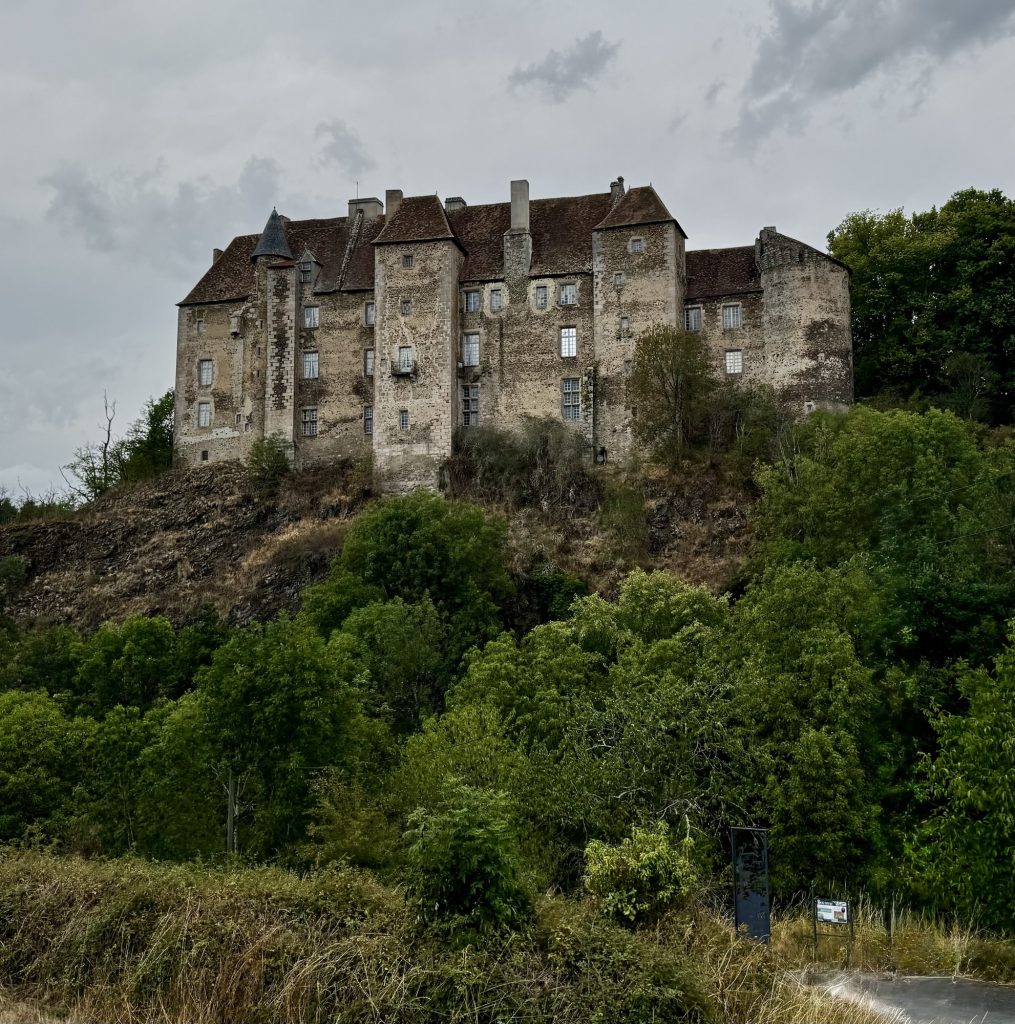
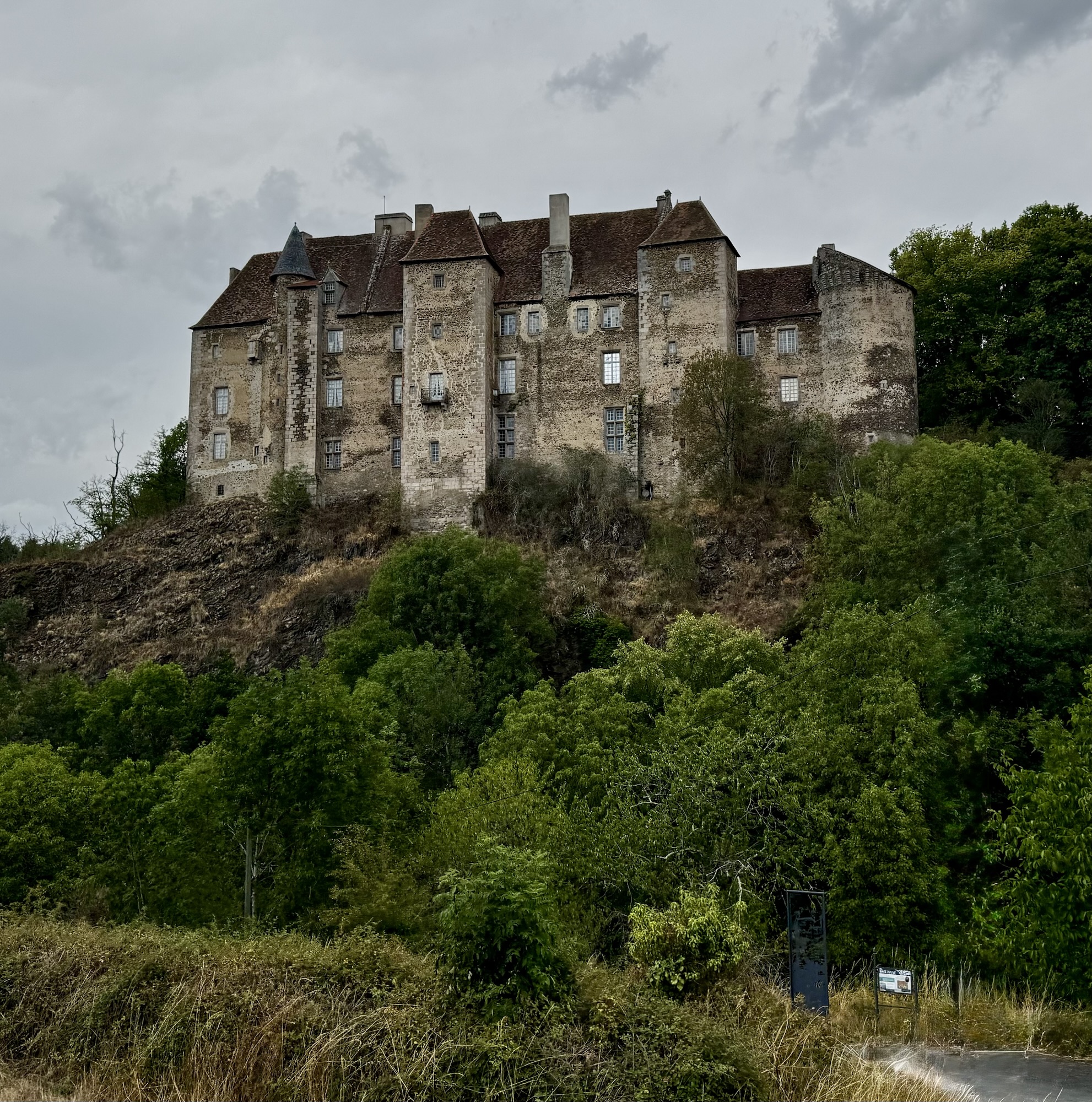
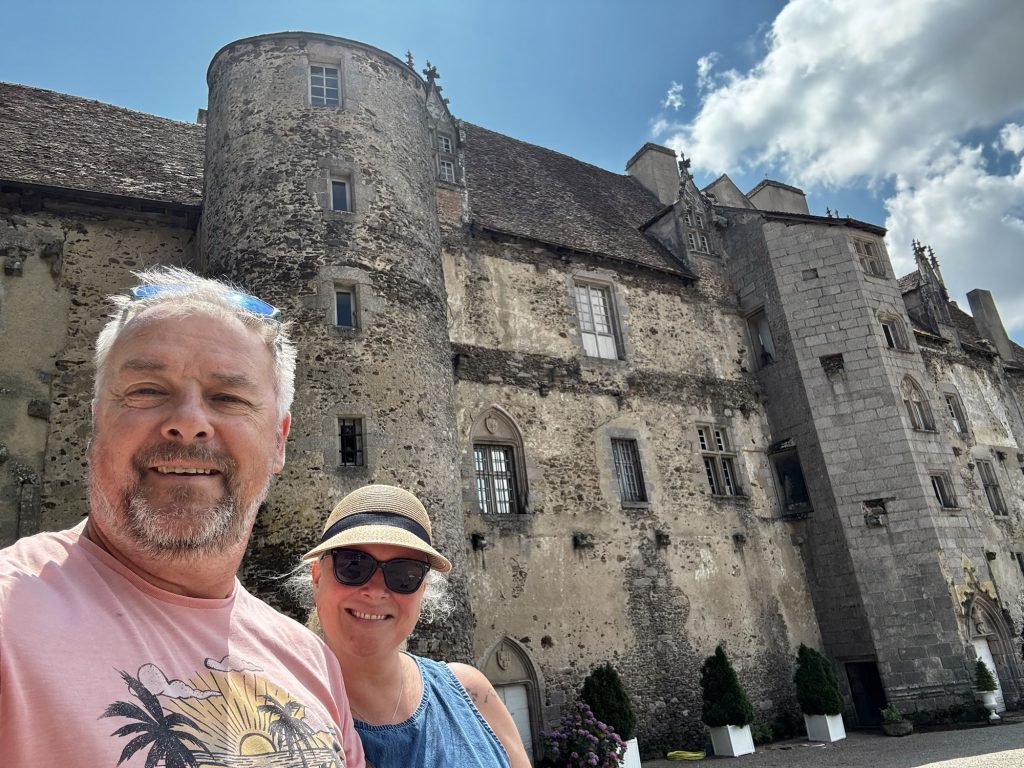
High above us, sitting proudly on its rocky outcrop, was Château de Boussac.
It wasn't polished.
It wasn't pretending to be Versailles.
It didn't have immaculate formal gardens or queues of coaches unloading tourists in matching baseball caps.
Instead, it looked exactly how a medieval castle should.
Solid.
Slightly battered.
Entirely unconcerned by modern life.
It had survived wars, revolutions, kings, queens and centuries of weather.
I was quietly hoping it could also survive two slightly sunburnt tourists from Wiltshire.
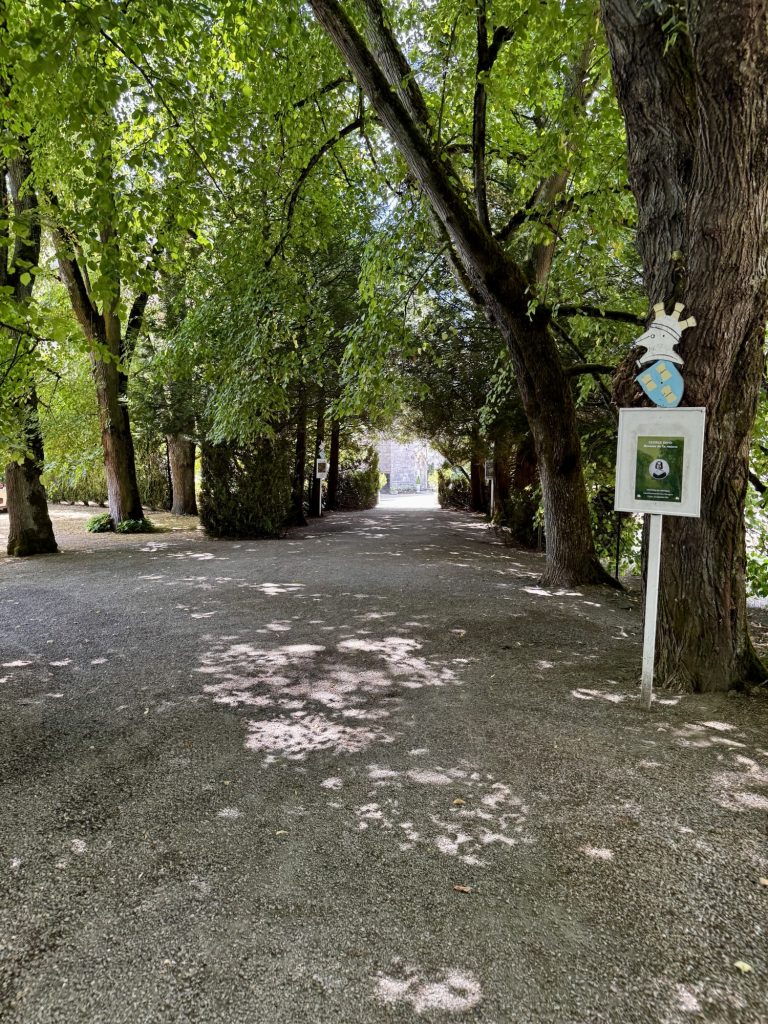
The tree-lined avenue leading to the entrance was beautiful.
Huge lime trees stretched overhead, their branches forming a green tunnel that muffled the sounds of the outside world. Gravel crunched beneath our feet, birds chattered somewhere high above us and there was that unmistakable smell of warm stone mixed with old woodland that only historic places seem to have.
"This is lovely," Dana smiled.
"It feels like we're walking into history."
"I hope history speaks English."
History, it transpired, had other ideas.
We bought our tickets and joined a small group waiting for the guided tour.
Our guide arrived wearing the sort of smile that immediately tells you someone genuinely loves what they do.
She welcomed everyone warmly.
"Bonjour..."
Excellent.
I understood that.
Then she continued.
And continued.
And continued.
Not the sort of French you hear ordering coffee.
Not the French from GCSE tapes where someone slowly asks for directions to the swimming pool.
This was proper French.
Fast French.
Enthusiastic French.
French with hand gestures.
French with emotion.
French spoken by somebody who had absolutely no intention of slowing down simply because two English people had wandered into the group.
Dana leaned slightly towards me.
"Did you catch any of that?"
"I think she mentioned the château."
"We're standing in it."
"So I'm following perfectly."
For the next ten minutes we became remarkably good actors.
Whenever everyone else nodded...
We nodded.
Whenever someone laughed...
We laughed.
Usually about two seconds later.
I have absolutely no idea what they were laughing at, but it seemed rude not to join in.
Occasionally the guide would point dramatically towards a fireplace, a tapestry or an ancient doorway and deliver what sounded like an absolutely fascinating explanation.
Everyone looked captivated.
I looked captivated too.
Mostly because I was desperately trying to identify whether she'd just been talking about medieval history or where the toilets were.
Fortunately, somewhere between the entrance hall and the first staircase, inspiration struck.
Or rather...
Artificial intelligence did.
I quietly slipped my phone from my pocket.
Every time the guide stopped beside another mysterious object, I'd discreetly take a photograph.
While everyone wandered into the next room, I'd pause for a few seconds and ask ChatGPT.
"What is this?"
Within moments I'd have an explanation.
Sometimes incredibly detailed.
Sometimes slightly uncertain.
Occasionally correcting itself after I took another photograph.
Unlike certain tourists I could mention, ChatGPT wasn't afraid to admit when it might have got something wrong.
For the next hour we'd accidentally invented the world's first bilingual château tour.
One passionate French guide.
One AI assistant.
Two confused tourists.
It worked surprisingly well.
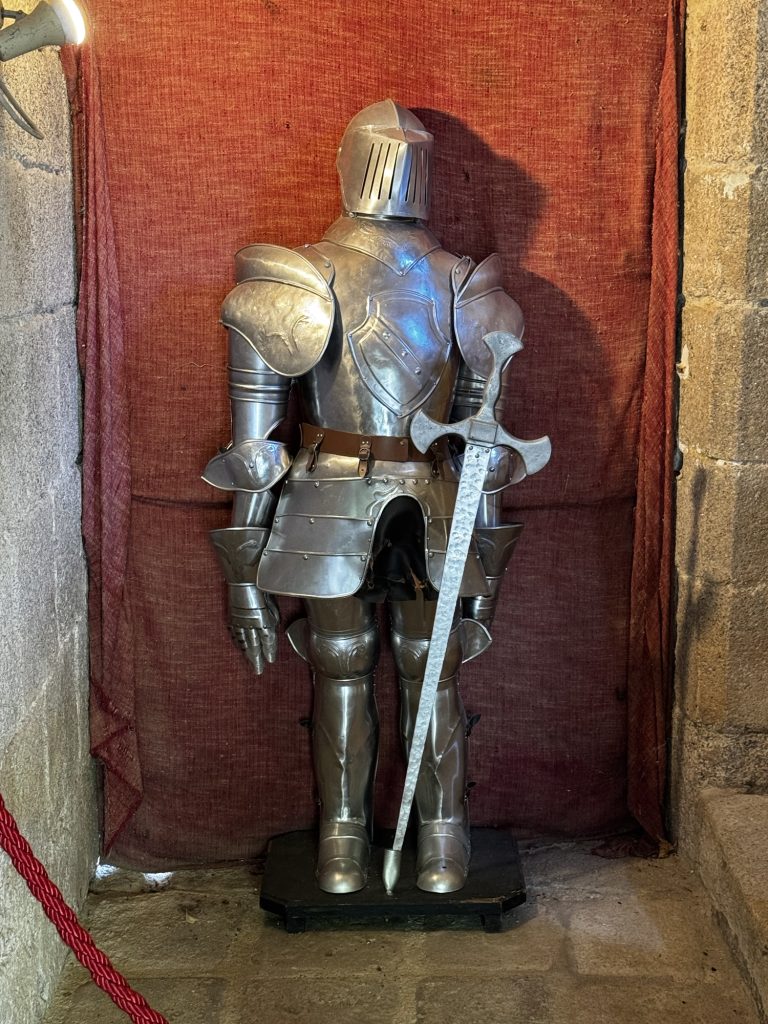
The guide stopped beside an impressive suit of armour and launched into another wonderfully animated explanation.
I admired the craftsmanship.
The polished steel.
The enormous sword.
The tiny viewing slit that must have made reversing almost impossible.
Then I looked at ChatGPT.
Apparently it was ceremonial armour from the late medieval period.
Excellent.
Now I knew.
The knight himself remained silent throughout.
In fairness, he spoke exactly as much English as our guide.
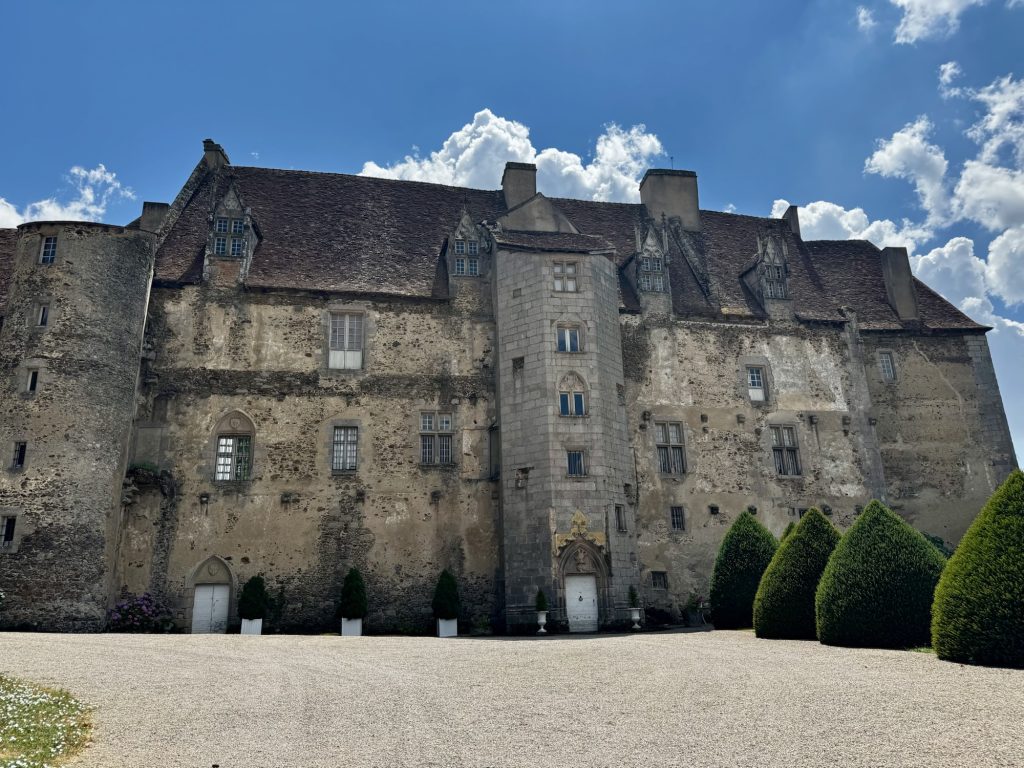
As we wandered deeper into the château it became obvious that this wasn't simply another historic building.
It felt alive.
The floors rolled gently beneath our feet, worn uneven by hundreds of years of footsteps.
The thick stone walls kept the rooms wonderfully cool despite the blazing sunshine outside.
Ancient oak beams creaked quietly overhead.
Every doorway leaned ever so slightly.
Nothing felt perfect.
Which somehow made it perfect.
Modern buildings are built with laser levels.
Medieval castles were apparently built with optimism.
The château is famous above all for one extraordinary discovery.
It was here that George Sand recognised the importance of the remarkable Lady and the Unicorn tapestries before they were eventually moved to the Musée de Cluny in Paris. Today they are considered among the greatest surviving medieval artworks in Europe.
Which made one aspect of the tour rather amusing.
We spent quite a long time discussing tapestries that no longer lived there.
It was rather like visiting Abbey Road Studios only to hear stories about Beatles who'd already gone home.
I'm absolutely certain there was a fascinating reason.
Unfortunately...
It was explained entirely in French.
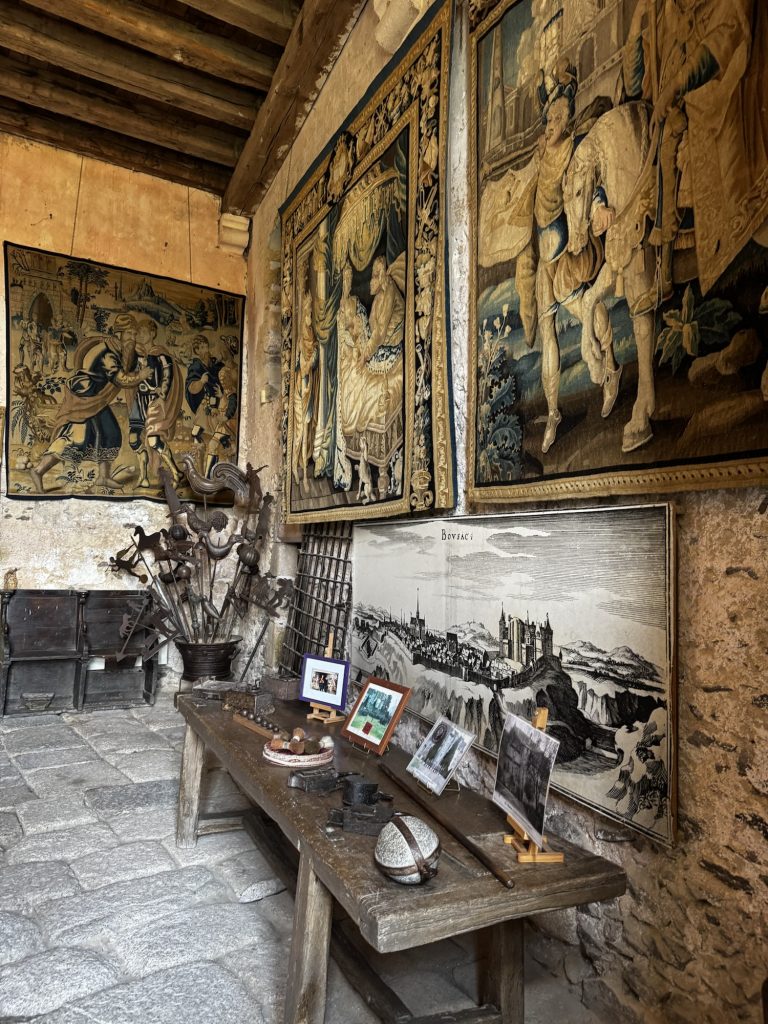
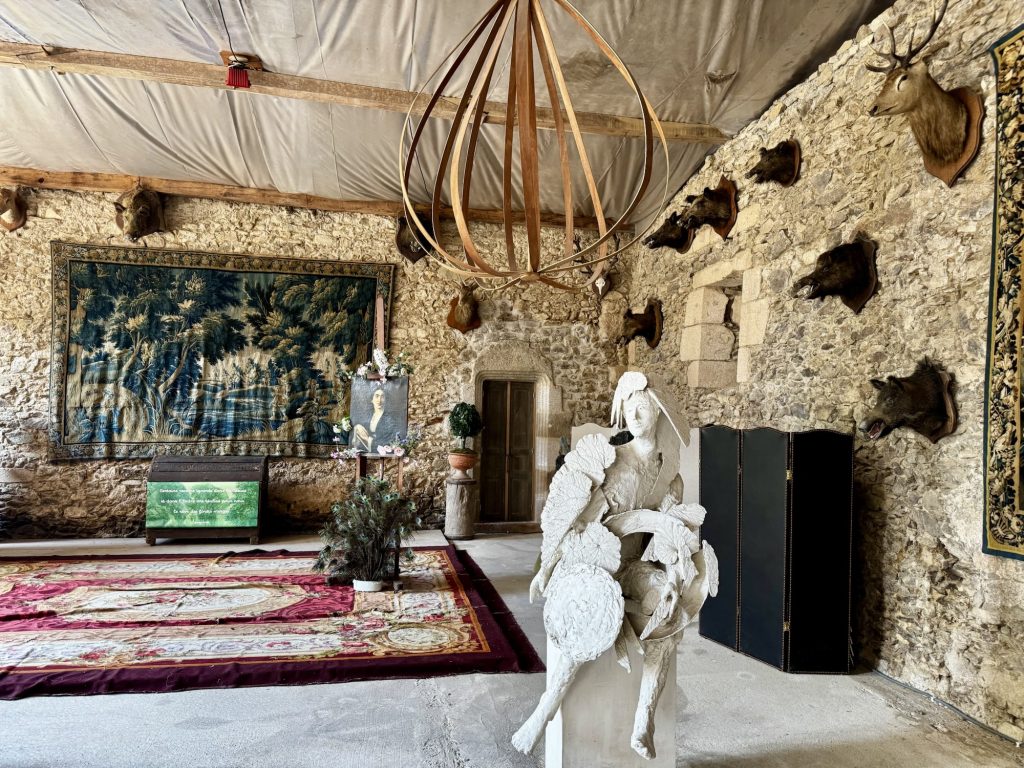
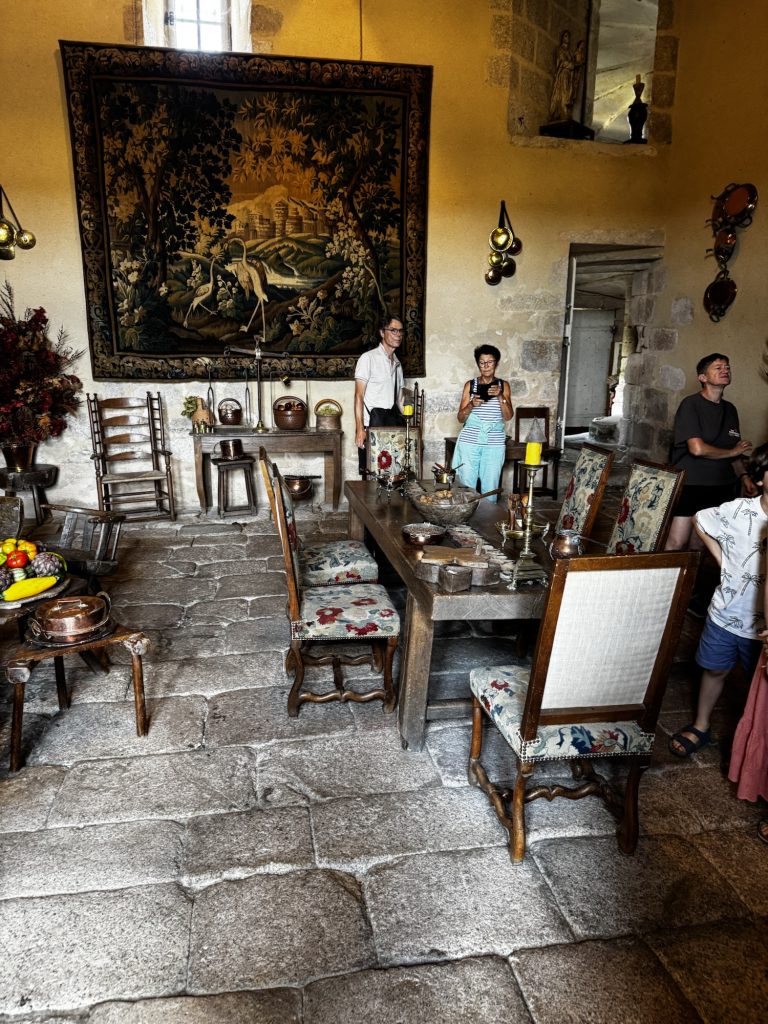
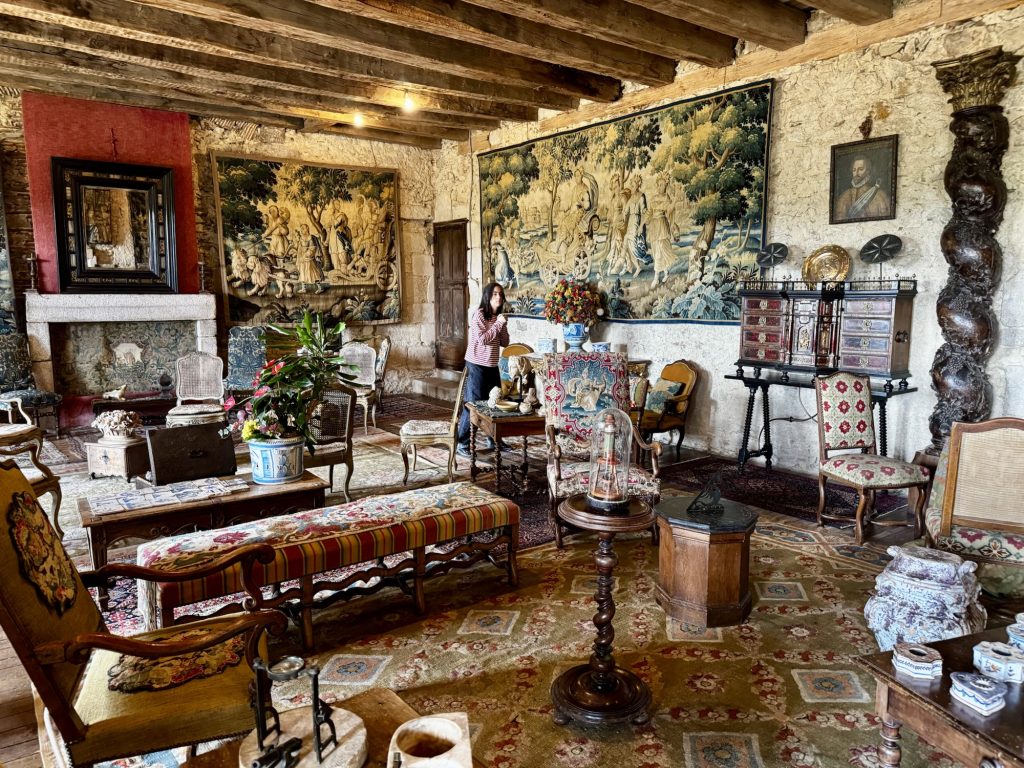
The entrance hall was breathtaking.
Towering tapestries climbed the walls.
Ancient weapons rested beside carved wooden chests.
The stone floor dipped and curved beneath centuries of footsteps.
Every object seemed to carry its own story.
Unlike some castles that feel preserved inside glass cabinets, Boussac still feels like a family home.
Admittedly, a family home where your ancestors appear to have collected absolutely everything.
And I do mean everything.
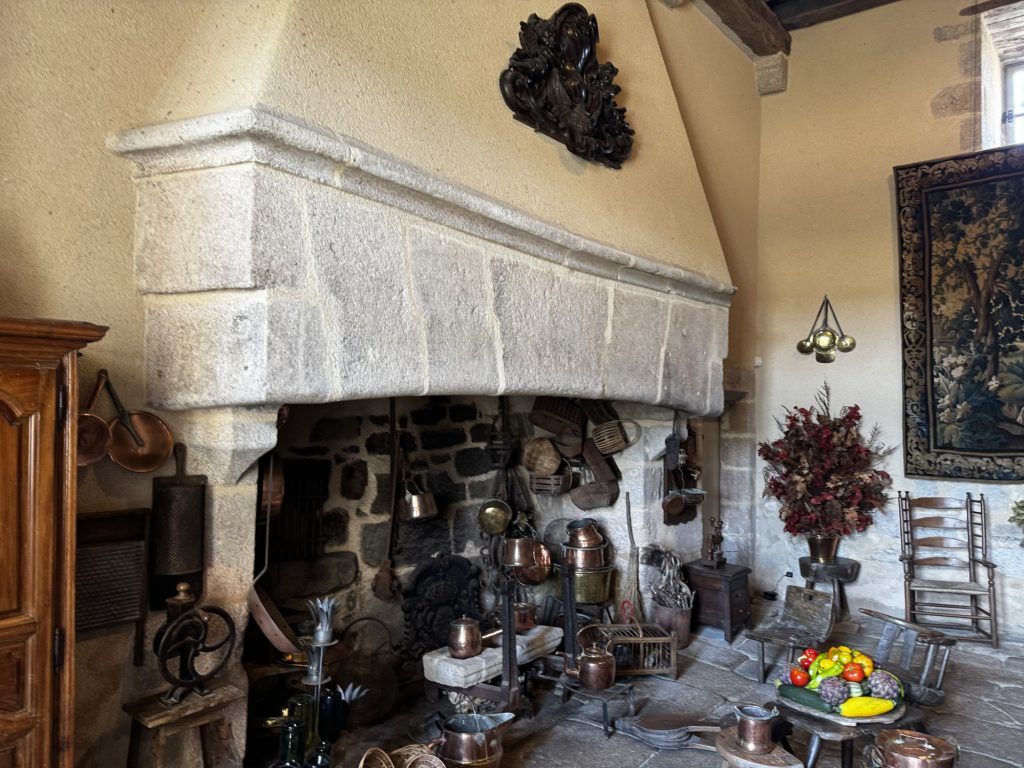
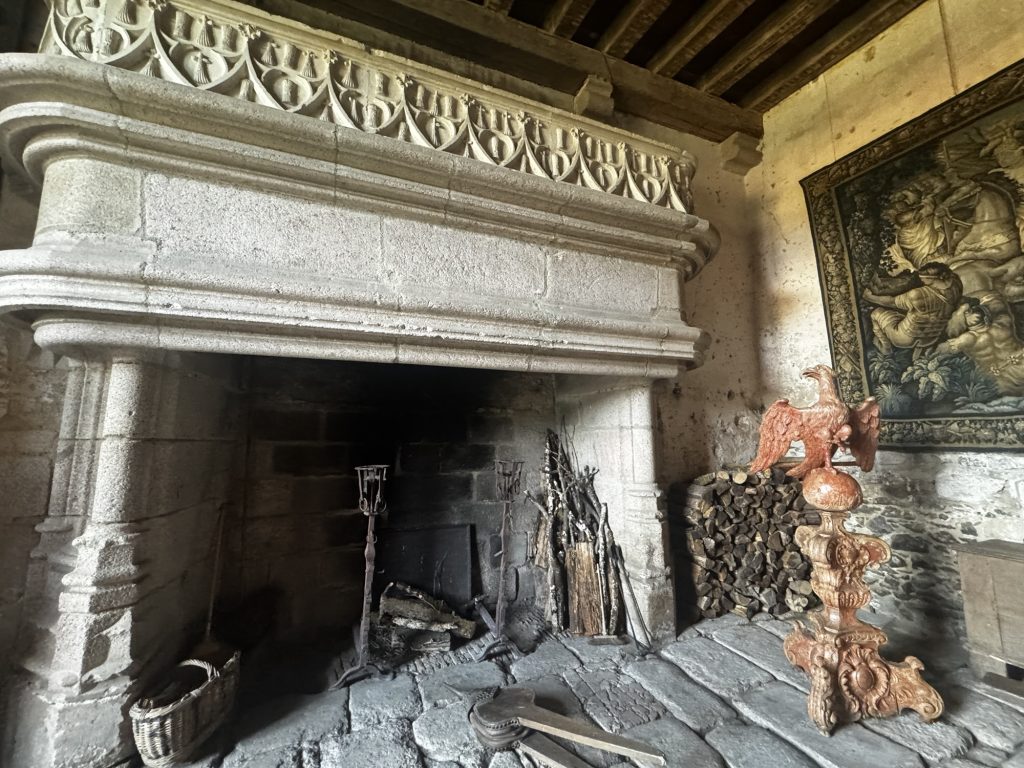
The kitchen was dominated by a fireplace so enormous it looked capable of roasting an entire cow.
Possibly two.
Copper pans gleamed beneath centuries of soot-blackened beams.
Iron cooking pots hung from hooks that had probably been in exactly the same place since Shakespeare was learning to write.
ChatGPT explained how meals would have been prepared over open fires for large households.
I stared into the fireplace.
"You could get Bandit in there."
Dana sighed.
"Not everything needs to involve the campervan."
"It'd fit."
"I'm not arguing."
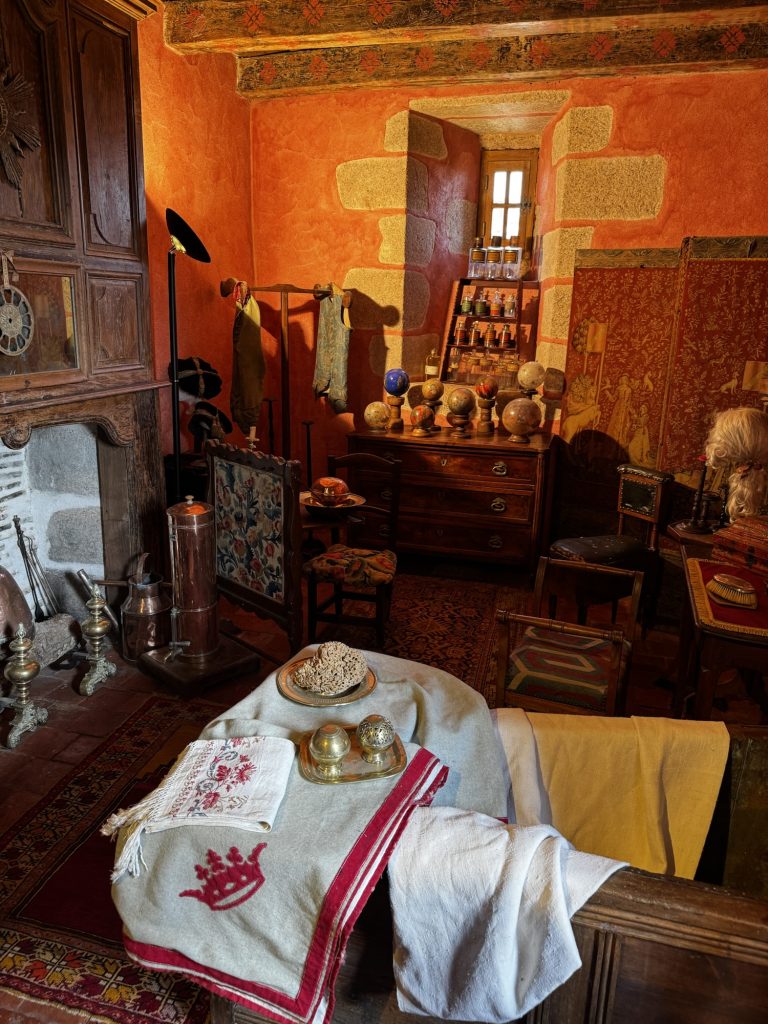
Then came the collections.
The owners of Château de Boussac, the Blondeau family, appear to have spent decades collecting fascinating objects.
Not in the minimalist sense.
More in the "if we find something interesting, let's keep it forever" sense.
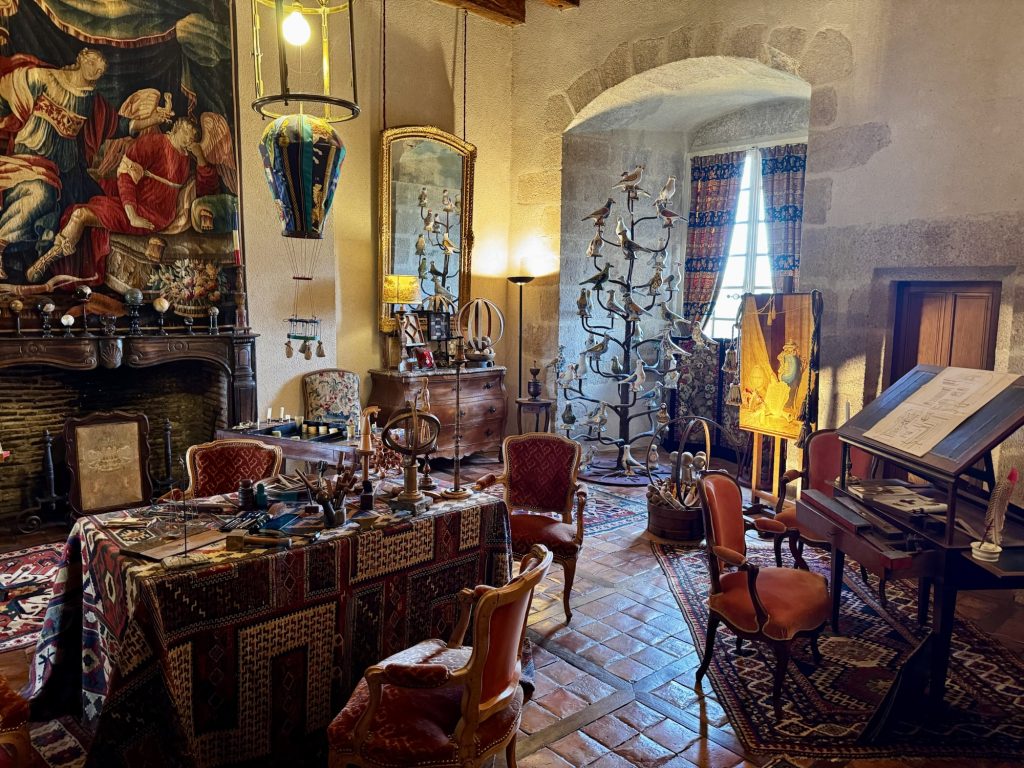
There were scientific globes.
Rare books.
Porcelain birds.
Medicine bottles.
Astronomical instruments.
Things whose purpose had disappeared centuries ago.
And things whose purpose had disappeared about five minutes after being invented.
Every room contained another surprise.
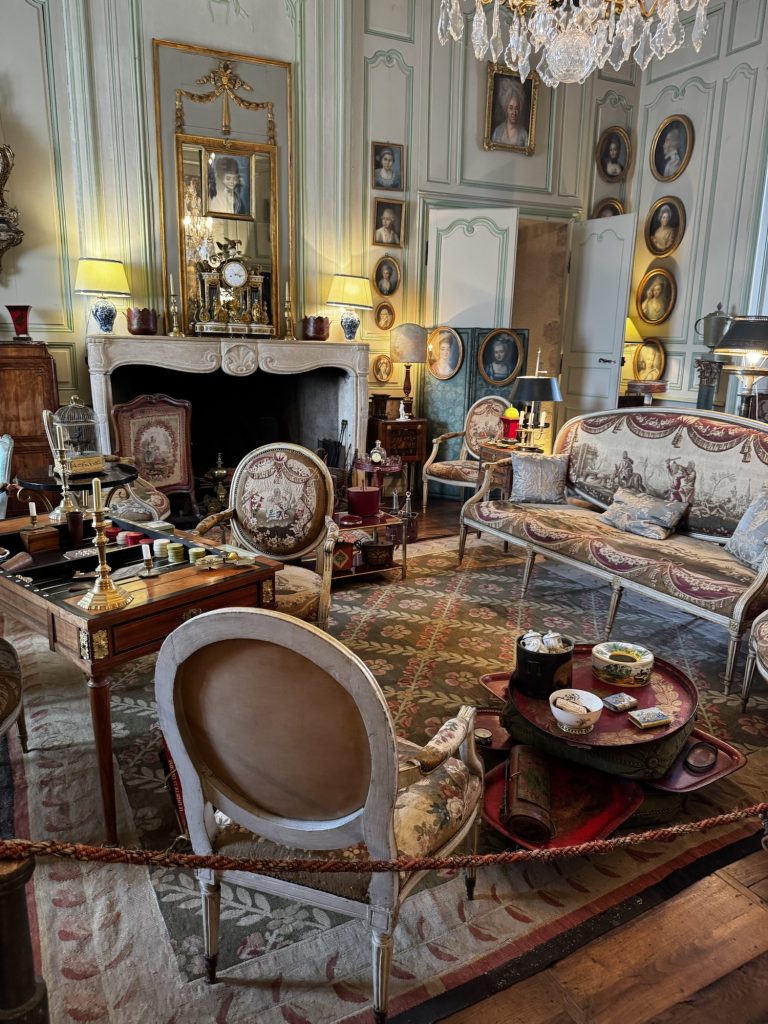
One moment we were standing inside a medieval fortress.
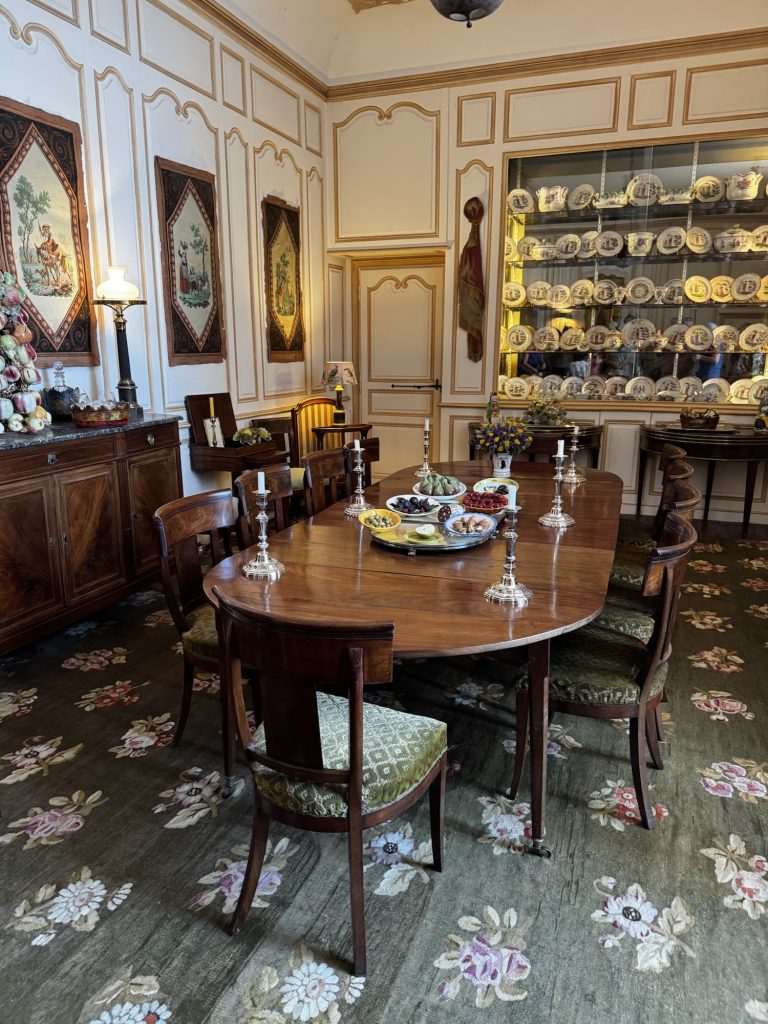
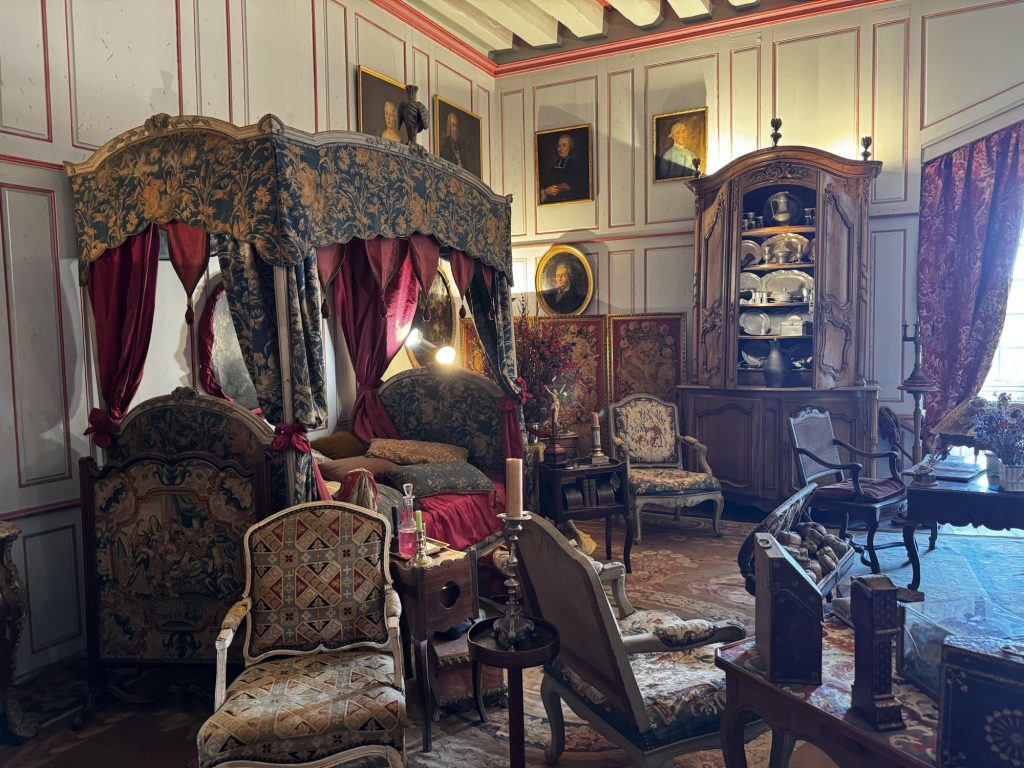
The next we walked into what looked like the sitting room of somebody who'd definitely have opinions about where you placed your teacup.
Crystal chandeliers sparkled overhead.
Portraits stared down from pale green walls.
Every chair looked as though it belonged in an antique shop where nothing had prices because if you needed to ask...
You couldn't afford it.
Dana whispered,
"I wouldn't dare sit down."
Neither would I.
I was fairly certain one sofa cost more than our house.
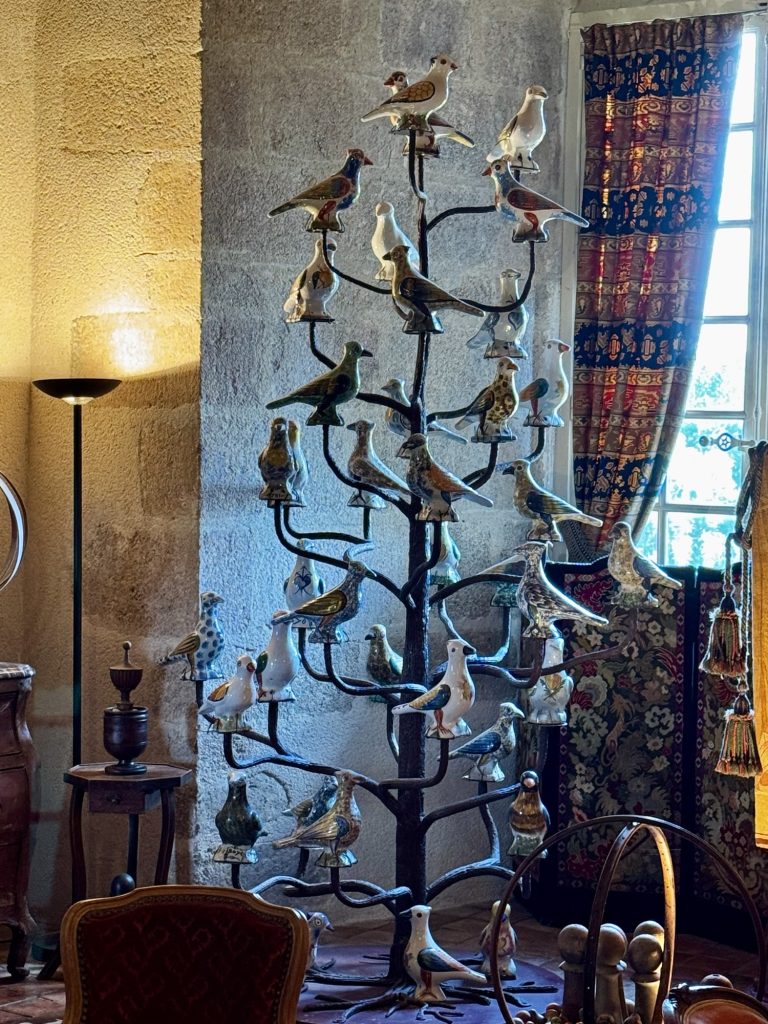
Then we discovered the bird tree.
An entire metal tree covered with porcelain birds.
Naturally.
Because every château needs one.
At this point I'd completely stopped questioning anything.
After puppet heads and medieval medicine, ceramic pigeons seemed perfectly reasonable.
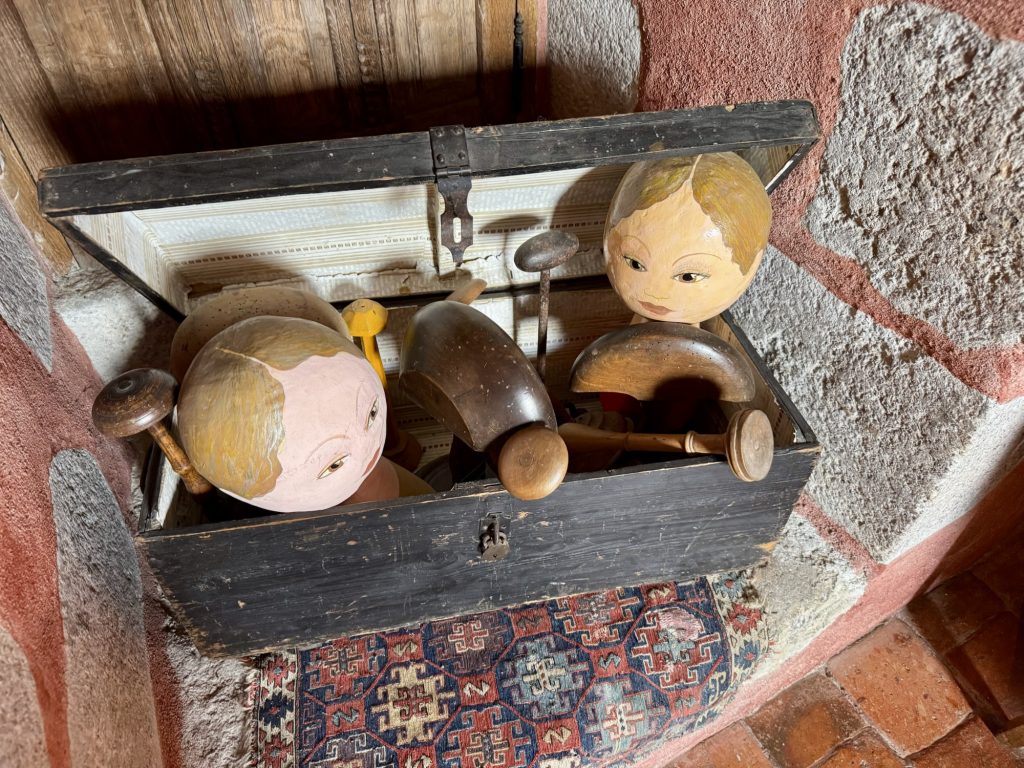
Then came the toy box.
Or, as I immediately christened it...
"The Beginning of Every Horror Film Ever Made."
Large painted heads peered out from inside an old wooden chest.
Wooden limbs.
Bodies.
Various pieces waiting to be assembled.
The guide smiled warmly while explaining them.
Everyone nodded appreciatively.
I quietly photographed them.
ChatGPT assured me they were handcrafted marionette parts.
That sounded considerably more comforting than my original theory.
Which involved them quietly climbing out after dark.
I wasn't entirely convinced.
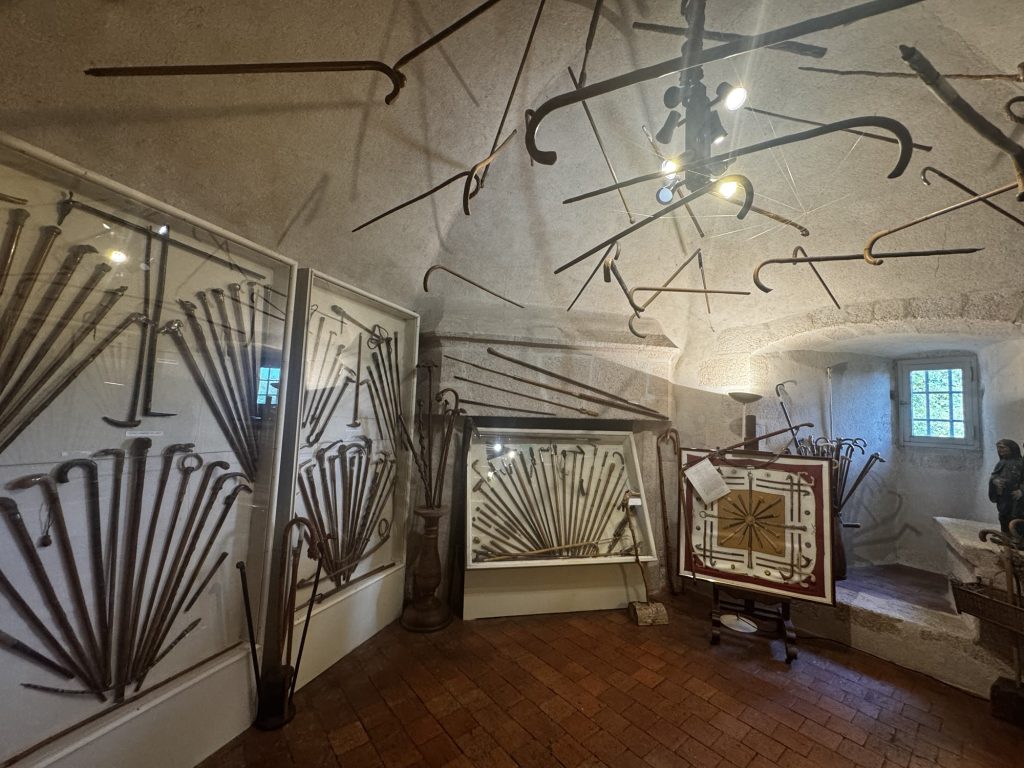
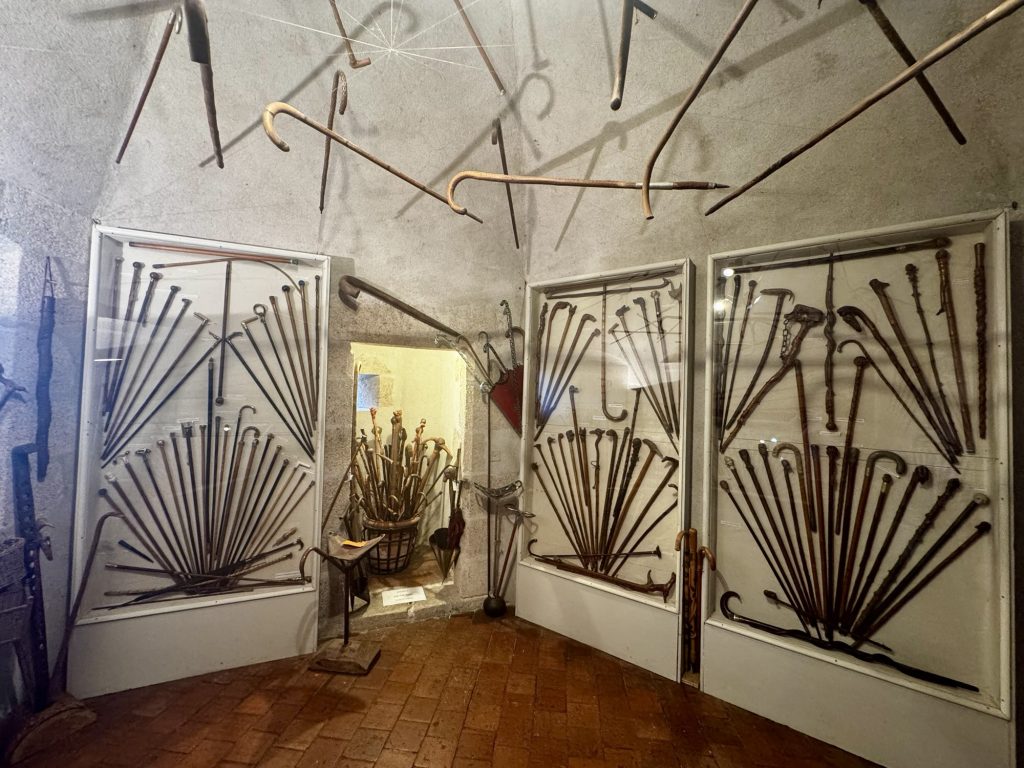
Finally we entered the room devoted entirely to walking sticks.
Not a display cabinet.
Not a corner.
An entire room.
Hundreds of them.
Some hanging on the walls.
Some arranged inside cabinets.
Some suspended from the ceiling like some kind of Victorian forest.
Every collector eventually reaches a point where a friend should gently suggest they might have enough.
Apparently nobody had that conversation.
I loved it.
Not because I particularly like walking sticks.
But because it perfectly summed up the château.
It isn't trying to be a polished museum.
It's wonderfully eccentric.
It's the personality of generations of owners scattered through ancient rooms.
And somehow that makes it feel more authentic than castles where every chair sits exactly where an information board tells you it should.
As we wandered back through the courtyard towards the exit, I realised something.
I couldn't remember every date.
I couldn't tell you every noble family who'd lived there.
I'd almost certainly forgotten half the names mentioned during the tour.
But I remembered how it felt.
The cool stone beneath my hand.
The smell of ancient timber.
The uneven floors.
The shafts of sunlight catching centuries-old dust.
I remembered a guide who loved her château enough to speak about it with genuine passion, even if we only understood one word in twenty.
And I remembered quietly following behind with my phone, taking photographs and asking questions that would have seemed impossible only a few years ago.
Dana smiled as we reached Bandit.
"So..."
"So?"
"I think ChatGPT earned its entrance fee today."
"It certainly translated better than I did."
As we drove away, the castle slowly disappeared behind the trees.
It had survived hundreds of years without artificial intelligence.
But for one gloriously confused afternoon, it gained an unexpected second tour guide.
One spoke beautiful French.
The other lived inside my phone.
Between them, they told a story neither could have told alone.
And somewhere in the middle of all that history, laughter and glorious confusion, Château de Boussac became one of those places we'll remember not because everything went according to plan...
...but because absolutely nothing did.