Travel journal
Lionhearts, Martyrs and Thirty-Nine Degrees
11 July 2026
Day two
There are mornings when you wake up and immediately know the day has plans for you.
This was one of them.
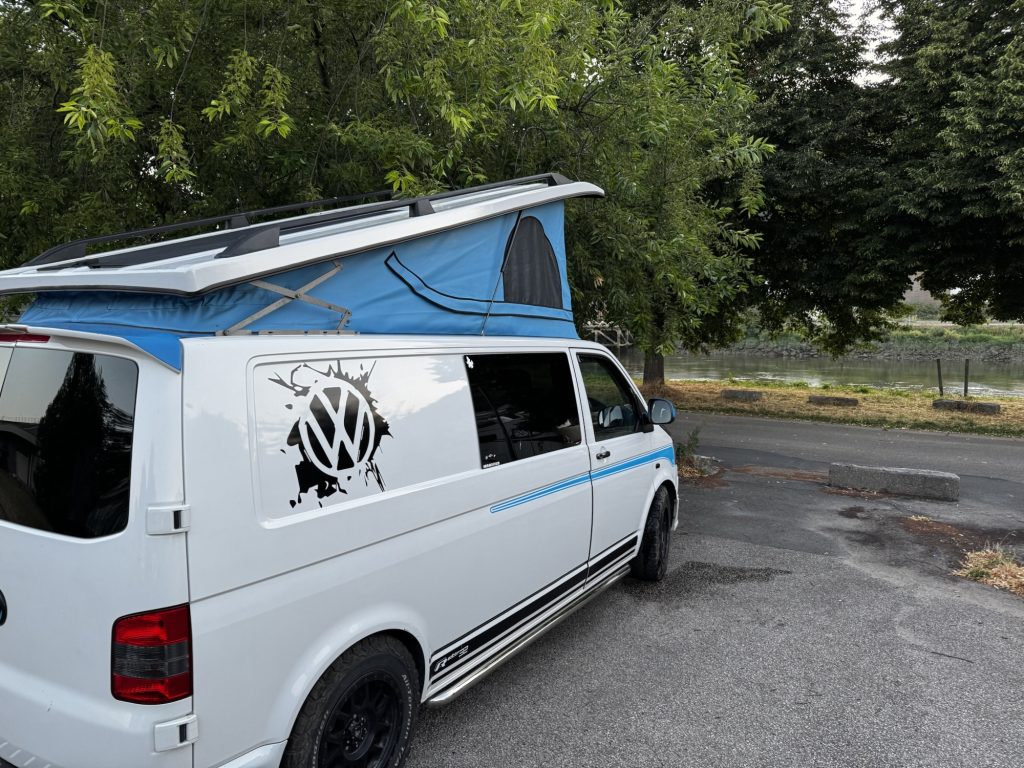
Our first night in Bandit had been surprisingly comfortable. I had claimed the top bunk, which came with a mattress that was perhaps best described as “enthusiastically thin”, but the cool night air drifting in from the Seine made for a surprisingly good night’s sleep. From my perch I could hear the gentle lapping of the river and the occasional cyclist rolling past long before the city properly woke.
Naturally, my first thought was swimming.
The Seine was only a few metres away, and the temptation was almost overwhelming. I wandered down to the water’s edge full of optimism, already imagining being able to say I’d swum in the Seine.
Then I reached the bank.
Rather than inviting water, I was greeted by a thick layer of dark, sludgy mud. The sort of mud luxury spas charge a fortune to smear all over you in the name of wellness. This, however, looked less like a health treatment and more like something that would leave me smelling of low tide for the rest of the holiday.
I stood there for a moment.
“No,” I muttered.
Even I have limits.
Back at Bandit, while breakfast quietly came together, another important job awaited.
Every proper road trip deserves a soundtrack.
So we built ours.
Song after song was added until our Spotify playlist became less of a playlist and more of a travelling companion. The Proclaimers promised to walk 500 miles, Queen assured us nobody could stop us now, Fleetwood Mac waited patiently for the evening drives, and as we crossed into France, Vanessa Paradis and Stromae reminded us we were finally on the continent.
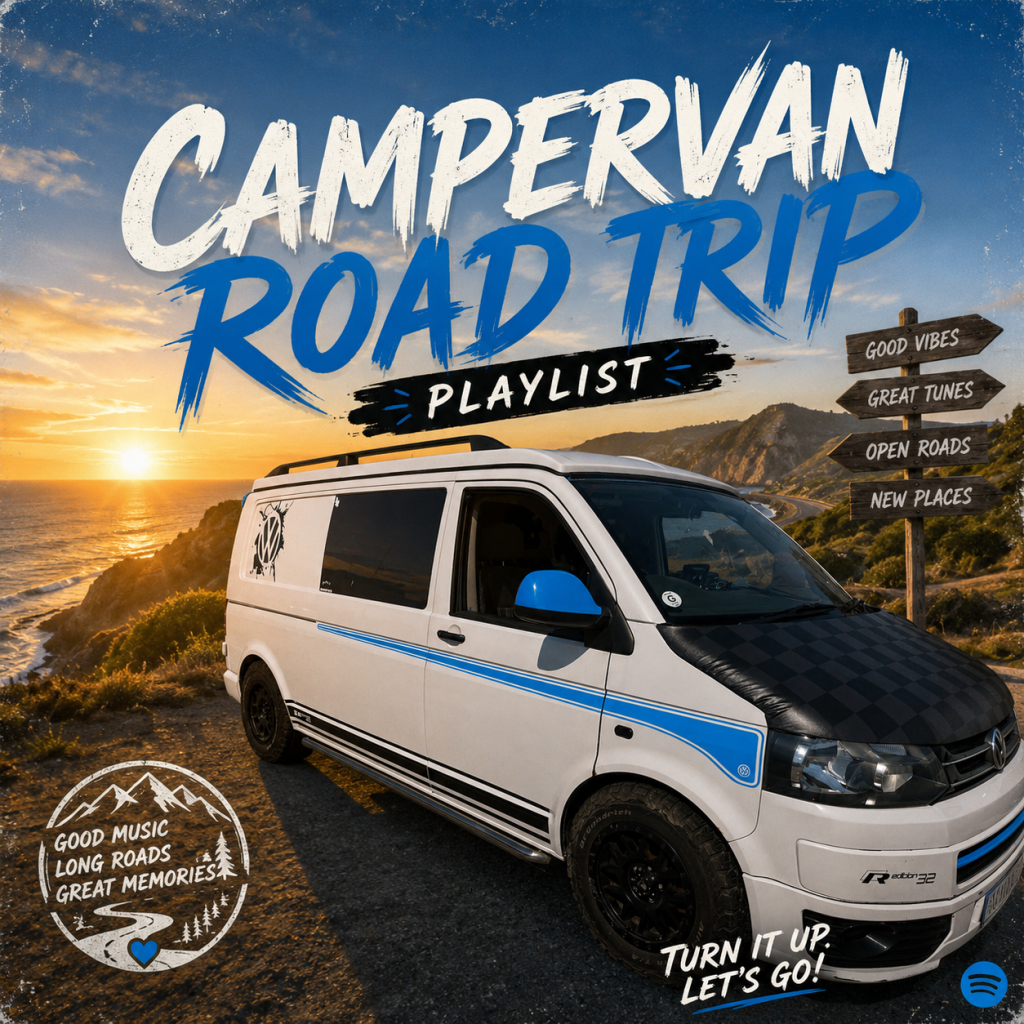
The playlist felt like the holiday itself.
Equal parts nostalgia, optimism and songs we’d both pretend not to know all the words to.
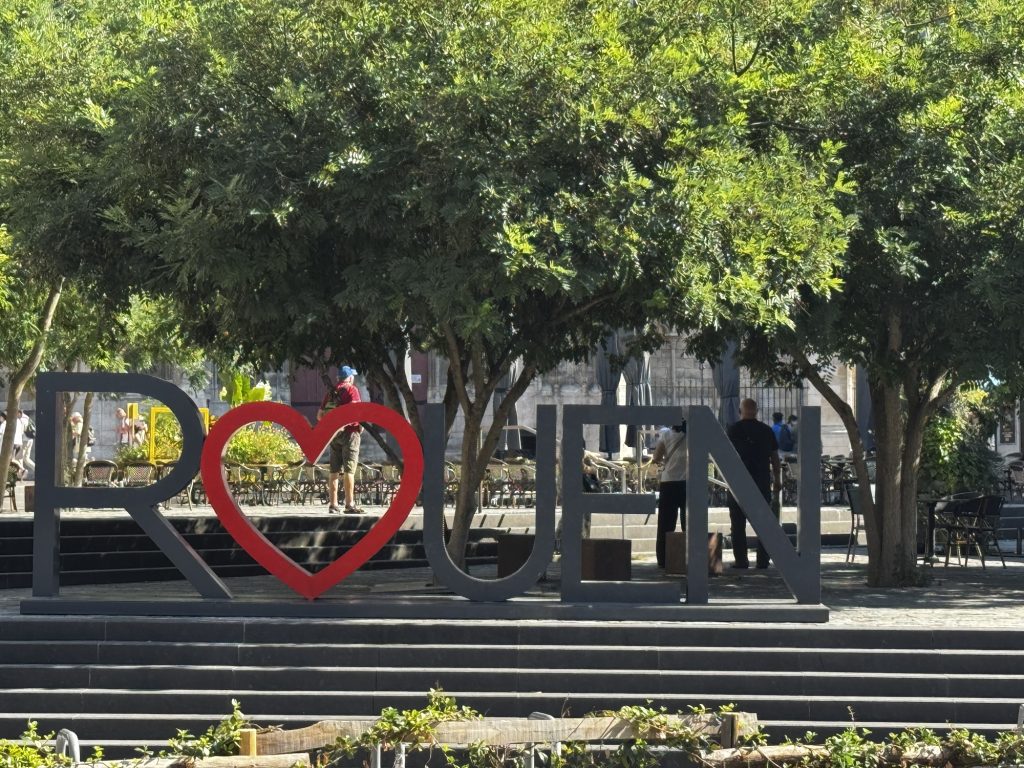
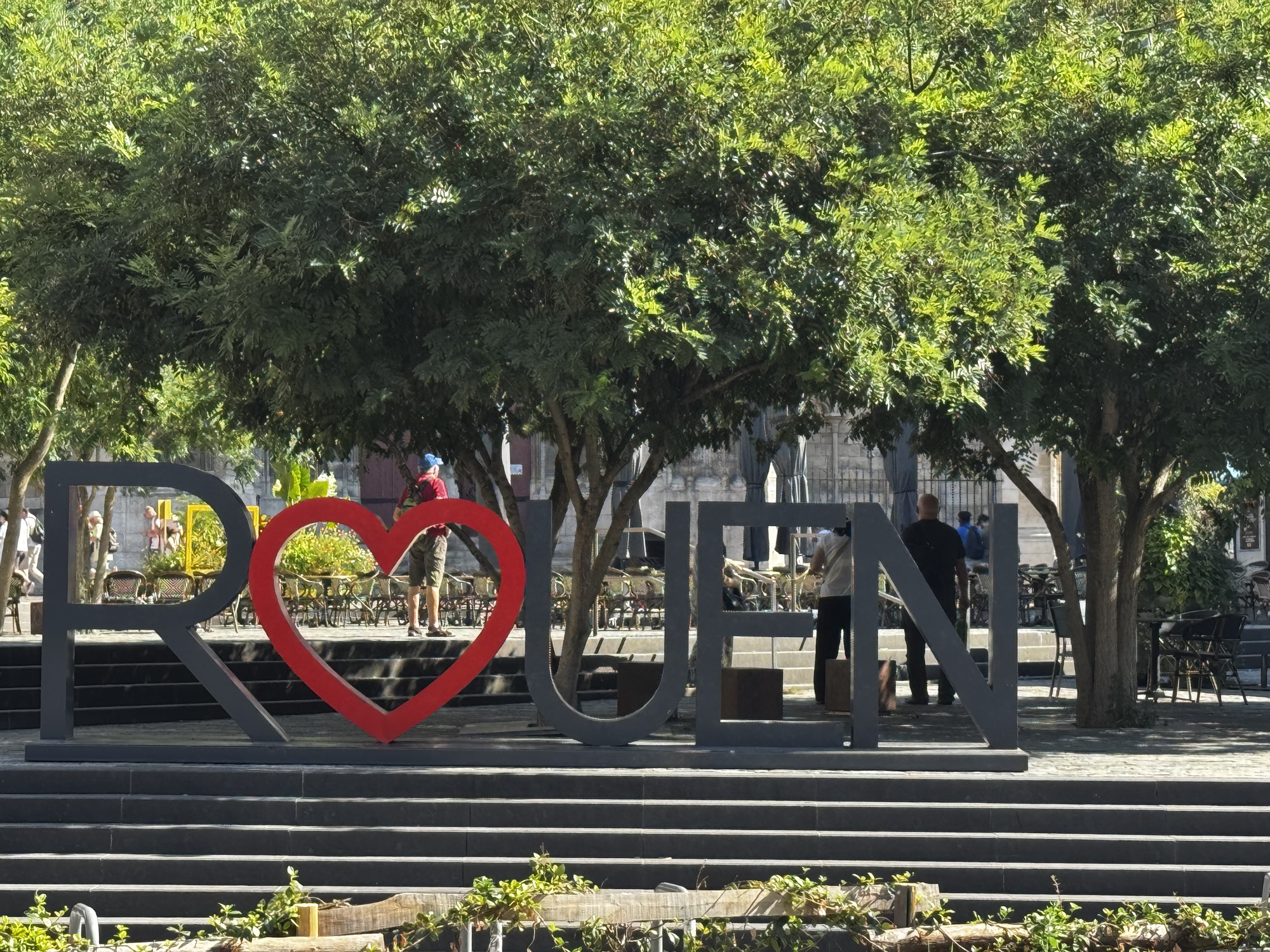
With coffee finished, we wandered into Rouen.
The city doesn’t gradually reveal itself.
It simply appears.
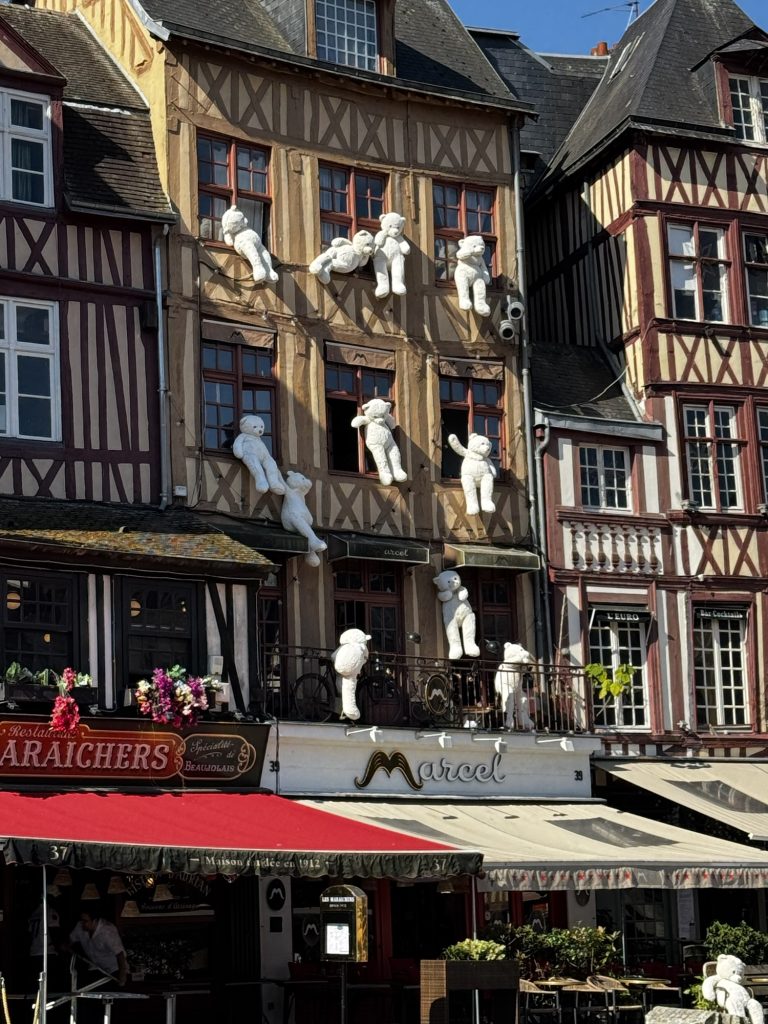
One minute you’re strolling along ordinary streets and the next you’re surrounded by leaning timber-framed houses, crooked windows, flower-filled balconies and narrow cobbled lanes that seem almost too perfect to be real.
Every corner looked like a film set.
Except people actually lived here.
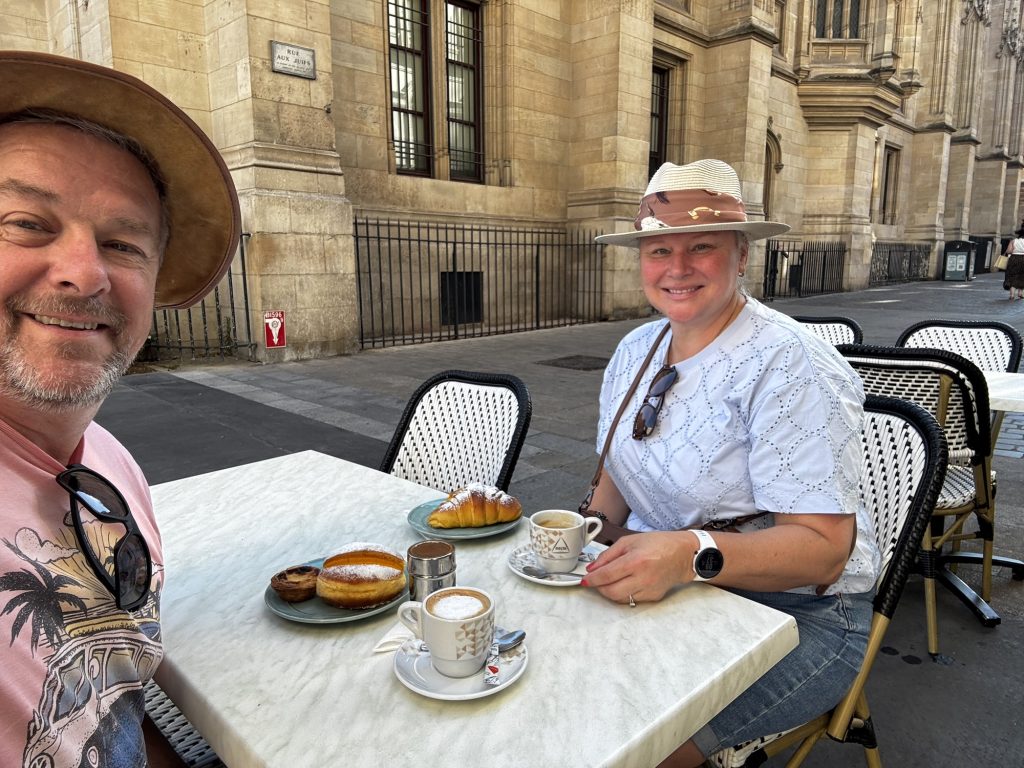
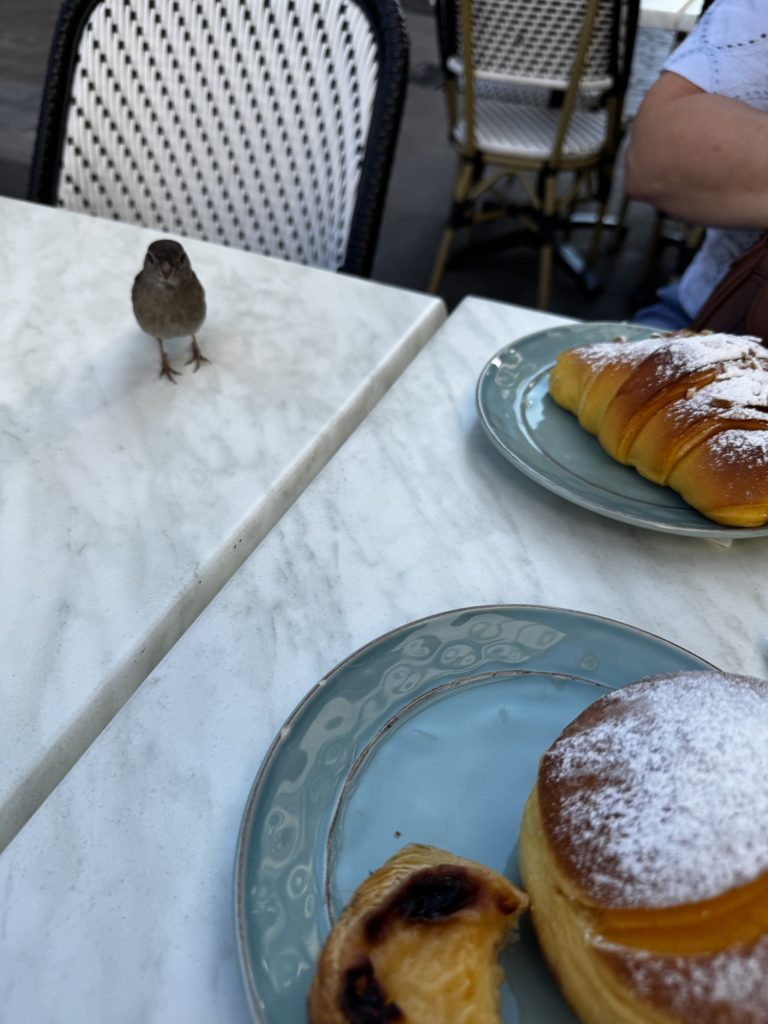
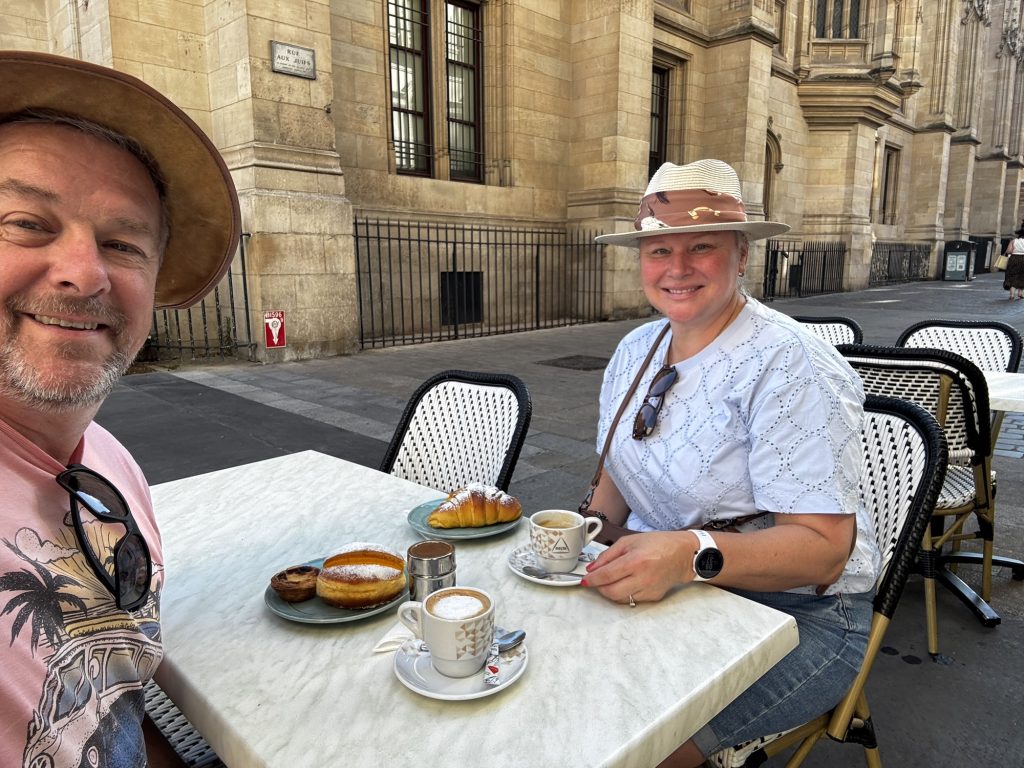
Our first stop was breakfast at Villa Neal, tucked away near the cathedral. Sitting outside with fresh coffee, warm pastries and the steady hum of the city waking around us felt wonderfully French. Nobody seemed in a hurry. Chairs scraped gently across pavements, conversations drifted through the air and the smell of fresh bread floated out of nearby bakeries.
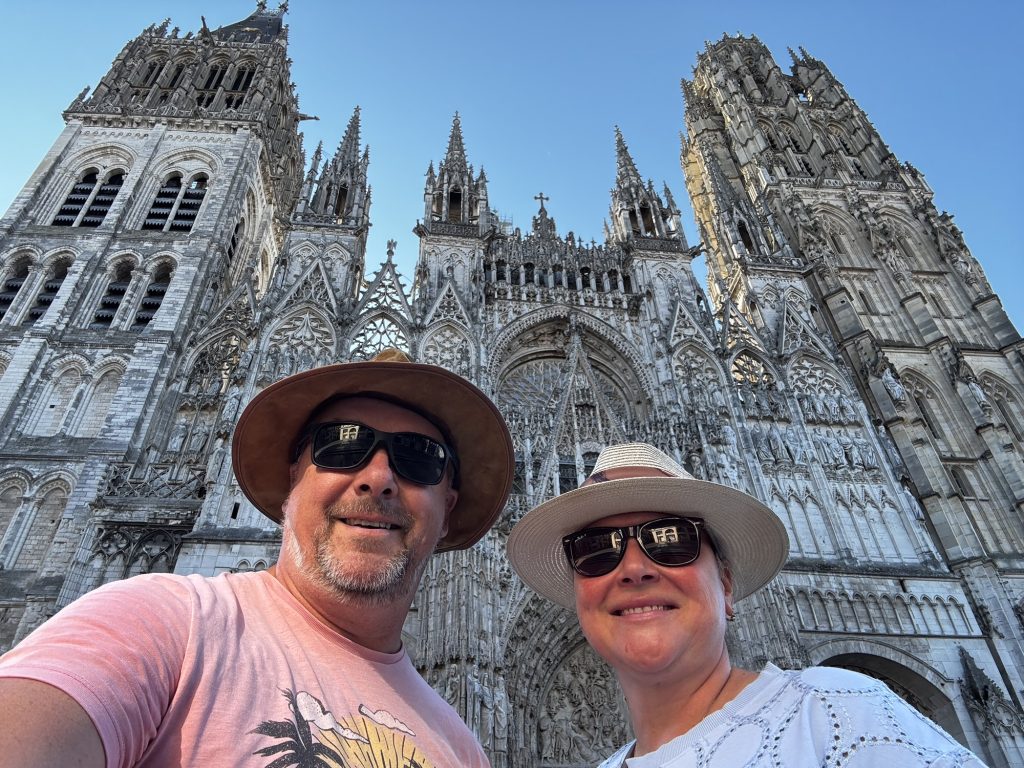
Then came the cathedral.
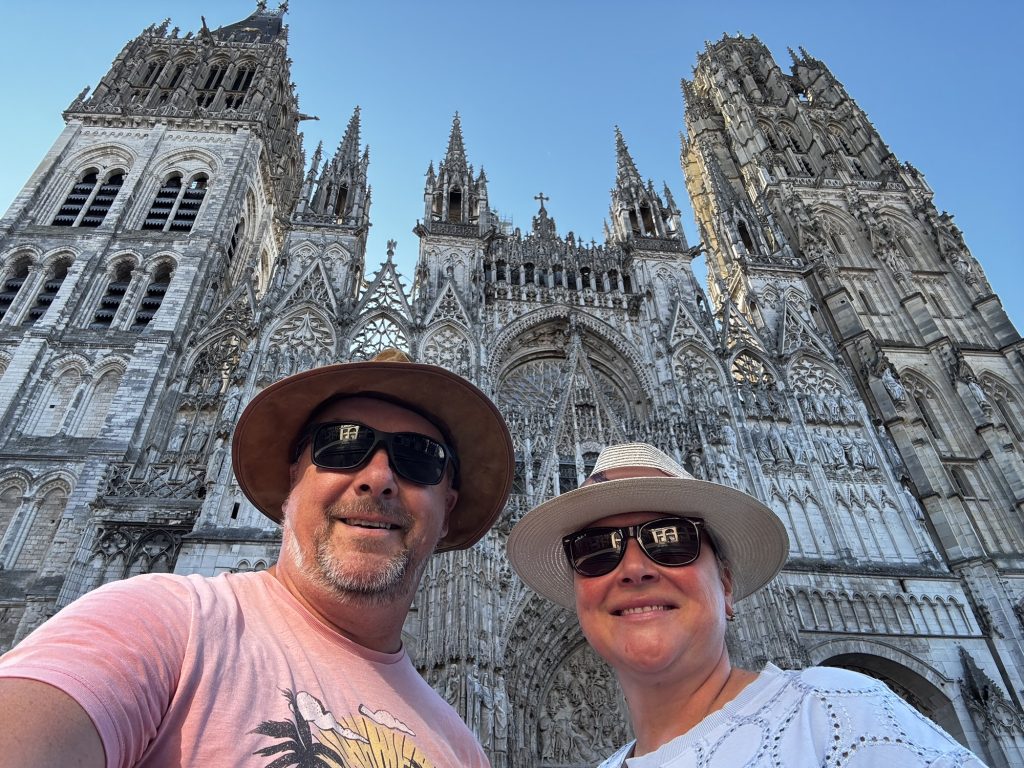
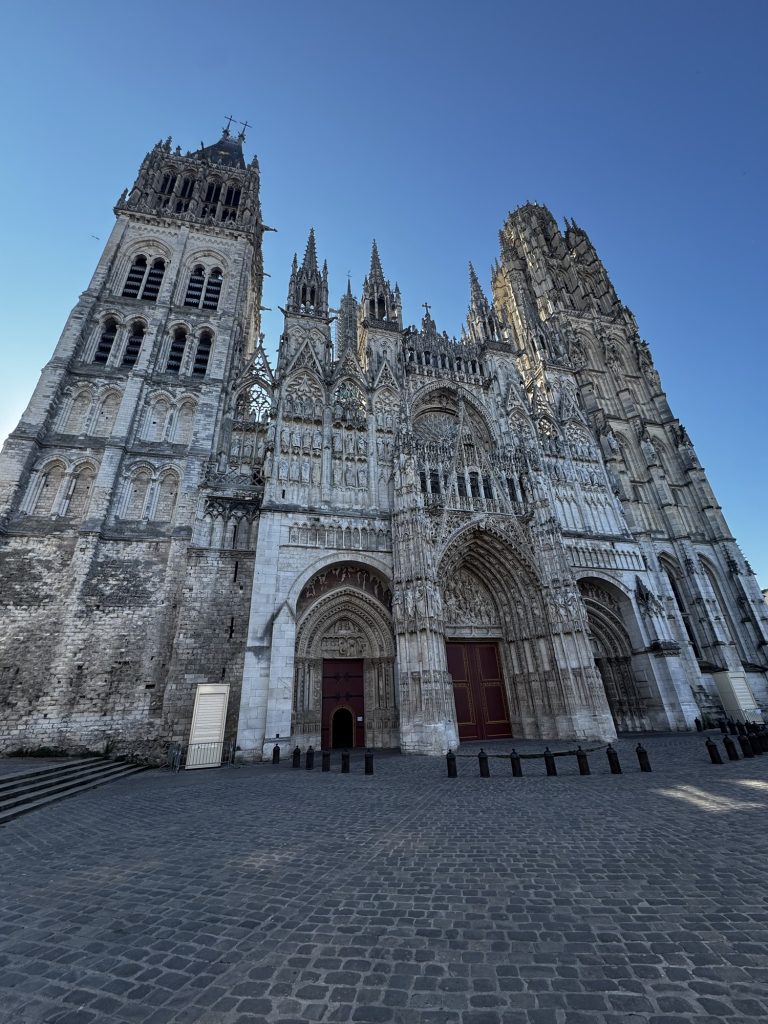
I’d seen photographs of Cathédrale Notre-Dame de Rouen.
None of them prepare you for standing beneath it.
The sheer scale is difficult to comprehend. Layer upon layer of carved stone climbs towards the sky until the eye simply gives up trying to follow it.
Inside, everything changes.
The noise of the city disappears.
Sunlight filters through stained glass, colouring the ancient stone with blues, reds and golds. People instinctively lower their voices. Even the footsteps sound respectful.
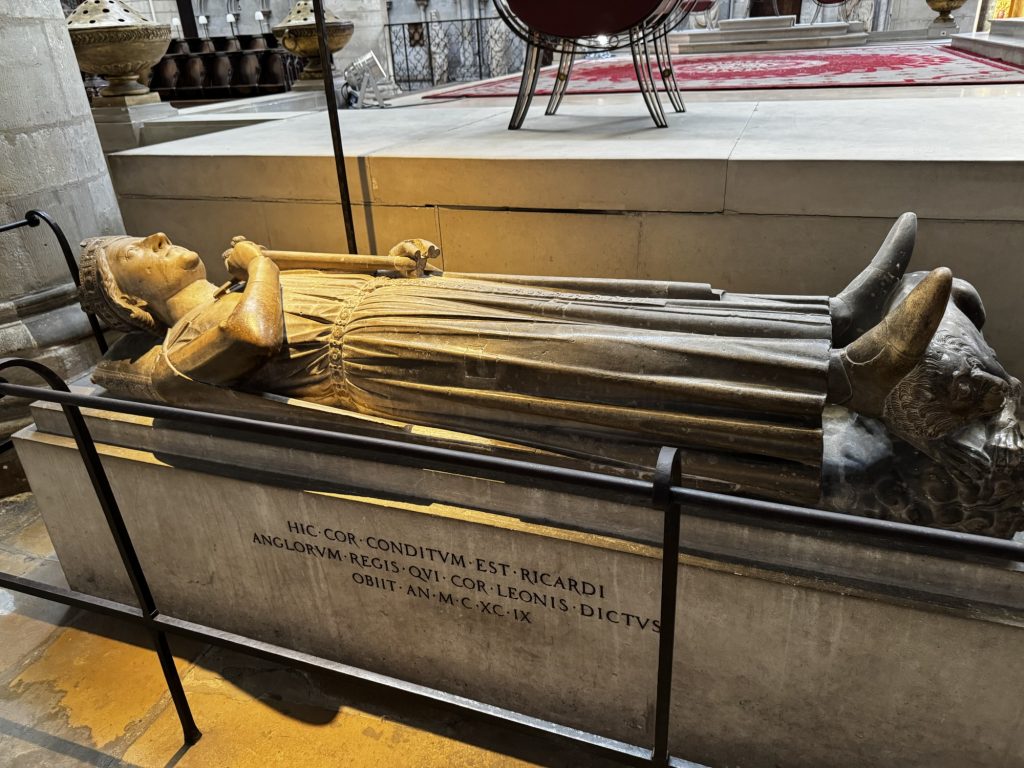
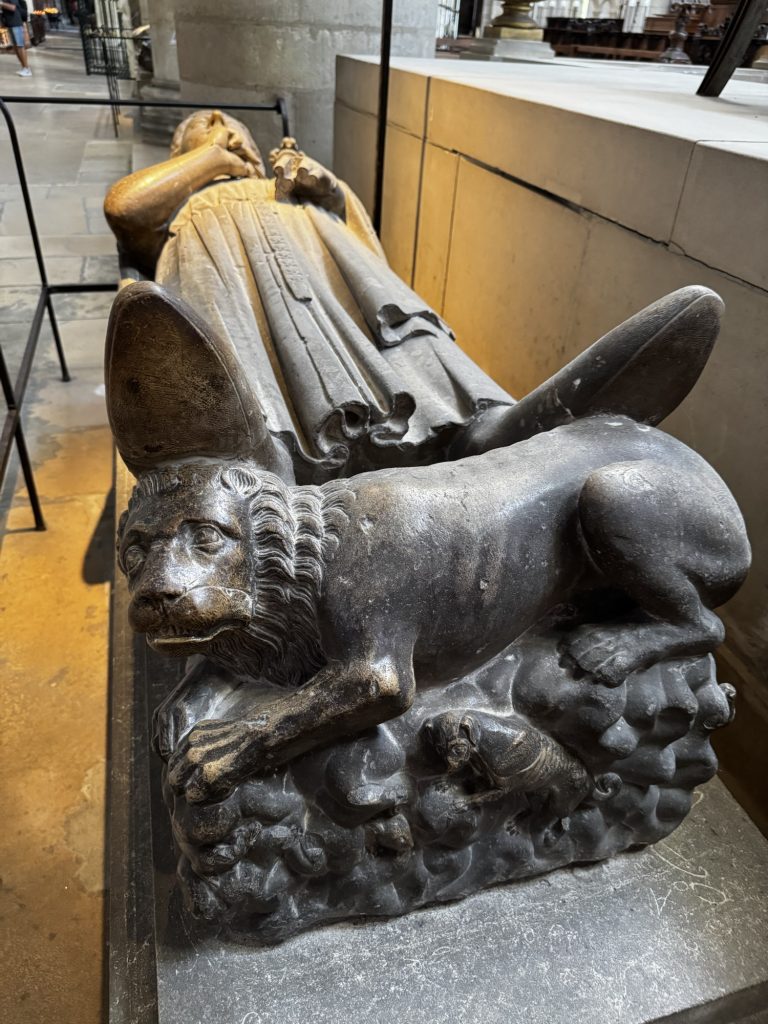
Somewhere within those walls rests the heart of Richard the Lionheart.
Standing beside the simple monument, it struck me just how extraordinary history can be. Here was the heart of one of England’s most famous kings. A warrior who led armies during the Third Crusade, fought Saladin, inspired the Robin Hood legends and spent remarkably little of his reign in England. Yet after his death in 1199, his heart was buried here in Rouen because he was also Duke of Normandy and considered Normandy home.
It’s a strangely moving thought.
A king remembered not by his crown, but by where his heart chose to stay.
Rouen has another story that feels impossible to ignore.
A short walk away lies the Place du Vieux-Marché.
Today it’s full of cafés, flowers and people enjoying lunch in the sunshine.
In 1431, this was where Jeanne d’Arc was tied to a stake and burned alive at just nineteen years old after being accused of heresy.
Standing there was sobering.
History has a curious way of making places feel louder, even when they’re completely silent.
Beside the square now stands the modern church dedicated to her, and inside sits a quiet chapel that feels less like a monument and more like an apology.
We wandered the streets for hours afterwards.
No real destination.
Just allowing Rouen to reveal itself.
Every narrow alley seemed to lead somewhere interesting. Colourful shutters. Tiny bookshops. Street musicians. Hidden courtyards. Cafés spilling onto pavements.
Dana would stop every few minutes.
“Oh… look at that.”
Usually she was pointing at another beautifully preserved medieval building.
Occasionally she was pointing at me because I’d wandered off following something I’d spotted three streets away.
Both happened with equal frequency.
Eventually, reluctantly, it was time to continue south.
The temperature had climbed to 39°C.
Bandit, wonderful though he is, has many talents.
Air conditioning is not one of them.
For three hours we rolled through the French countryside with every window open, warm air pouring through the van like someone pointing a hairdryer at our faces.
“I think we’re actually cooking,” Dana observed.
“I’m sure we’re acclimatising,” I replied, trying to sound optimistic while sticking slightly to the driver’s seat.
Thankfully, salvation arrived in the unlikely form of a Westfield shopping centre.
We escaped inside purely for “a quick look around”.
Which, translated into English, meant we stood under industrial air conditioning for far longer than was strictly necessary.
Neither of us was in any hurry to leave.
Eventually, refreshed and considerably less medium-rare, we completed the final stretch to our campsite.
Camping La Belle Étoile sits quietly beside another stretch of the Seine at La Rochette, just south of Paris. Trees provided welcome shade, the campsite was peaceful, and after the day’s heat it felt like we’d arrived at exactly the right place.
Bandit settled into his pitch as though he’d been doing French road trips all his life.
As evening arrived, I found myself thinking back over the day.
Rouen hadn’t just shown us old buildings or famous names from history books.
It had reminded us that places remember people long after they’re gone.
A king’s heart.
A young woman’s courage.
And two slightly overheated travellers wandering through it all with a campervan, a Spotify playlist, and the next adventure already waiting down the road.