Our bus to get here was a smallish bus – not the big comfort buses we had come to expect in Peru. No this was small and not very comfortable. We left Copacabana as it got dark and the journey through the mountains was to be in darkness. Scary!
Not a long journey though – just 4 hours we hoped instead of the 8 it had taken Dena yesterday.
The first obstacle – Lake Titicaca. We couldn't go around it without going back into Peru again so the only other option? Across it of course.
Now you are probably imagining a car ferry or something like that.
Think again. Think raft!
In the dark!
Yep we all piled off the bus and the bus with all our belongings drove onto a wooden raft and was guided out of the harbour by a man with a long pole like they do in Venice. It did not look safe one little bit.
Luckily for us, passengers get to take a regular little boat but there were moments when the raft wobbled so much we did wonder if we would ever see our belongings again.
Worry not though – everything made it safely across and we joined the bus and made it to La Paz around 10pm. Record time too!
Our Bolivia Hop guide on the bus Alessandro, showed us right to the door of our hostel for tonight and without him we don’t think we would have found it. This is one of the main reasons we booked with Peru/Bolivia Hop again. We loved the safety aspect of it and how they pick up and drop off from your door. We had heard how lonely and unsafe it was to be at La Paz bus station at night and not all taxi drivers can be counted on to be friendly after dark!
So tucked up under our feather duvets, we were at last warm and ready for a few great night’s sleep.
We are staying in a quite cute street which is in the old part of La Paz and where the buildings are old and the streets are cobbled - and very steep! Nearby is the famous Witch Market. It's not so big (we had seen much bigger Witch sections in the regular markets in Peru). The Witch Markets sell potions, herbs, llama fetuses (yes real fetuses) and all sorts of lucky charms for your house or shop. It is interesting to poke around especially if you haven't seen them before.
One day Jody decided to get her boots cleaned from a shoe shine chap in the street. He said the price was 5 Bolivianos - that's 50p. We agreed the price and he cleaned her boots and chatted away a bit as he did-so. He seemed quite friendly. Then we gave him a 10 Boliviano note and we were going to refuse the change we expected him to offer as we know they don't earn very much money.
But then he started demanding more! 50 Bolivianos he wanted - that's £5. Well he certainly wasn't going to get it and we told him so. So now we wanted our change from the 10 we gave him for being so rude. A lady was passing by and got the gist of what happened and started having a go at him too. We are sure she used much stronger spanish words than we did!
The upshot was we grabbed our 10 note back when we got a chance and left him 5 coins! Stupid man! By being so greedy he did himself out of extra money we were prepared to give him. Although this wasn't a particularly nasty or unpleasant experience, just one of those things, it had now put a taint on the way we felt about La Paz & Bolivia and we were now wary of everyone else.
La Paz isn't great for food either. We found ourselves often wandering around for ages in search of something that at least sounded appetising. The best thing about where we are staying is that it is the touristy bit so there are several western aimed restaurants serving some nice food.
Over several successive days we found a great Cuban,Mexican, Italian & Indian restaurants which really helped our mood (it's been months since we had eaten Indian). Oh and a great cafe serving falafel burgers practically across the road. All a welcome change from menus offering guinea pig, llama, and chicken. Does the whole world eat practically nothing but chicken???
The weather in La Paz really set the tone for the whole of Bolivia for us. The days were usually sunny but the nights were freezing. Thank goodness we had bought our lovely snuggly alpaca jumpers they are really toasty.
One afternoon we headed over to where there was a cable car terminal. La Paz has several of these now all built within the last 2 years and more lines planned to open by the end of 2016. As with Medellin in Colombia, they had been built to link the more outlying communities of the city and give them easy, quick access into the city for work. We think it is a marvellous idea and just perfect for cities built in the mountains - and less expensive that a metro system for sure.
We headed up around 4pm thinking we would get a coffee and wait for sunset so we could see the city light up. It seems as if the few restaurants up at the top terminal though, had only just realised they were supposed to be open and serve customers. A coffee was beyond 3 of them and the 4th asked us to wait whilst he found it. Welcome to Bolivia!
Well the sunset arrived and it was beautiful to see the mountain peaks glow with the golden light from the sun as it sank lower and lower. The city was pretty to watch lighting up but we were transfixed on the mountains and the golden peaks.
Good job the sun does eventually go down otherwise we would have been there all night!
On the Friday (22nd April) Bryan had set off on his "Death Road" bike ride so Jody at a loose end decided to take the Red Cap Walking tour which left Plaza San Pedro every day at 11am & 2:30pm. Too late for the 11am one she joined the group in the afternoon. This tour was the most recommended by all the reviews we found so she was hoping for something good.
We started in San Pedro where - not obvious - stands a very notorious prison. To save us from a lot of typing, here is what Wikipedia tells us about the prison, and indeed Red Cap Tours told Jody about the prison.
San Pedro is the largest prison in La Paz & renowned for being a society within itself. Significantly different from most correctional facilities, inmates at San Pedro have jobs inside the community and have to buy or rent their cells. Often their families live with them . The sale of cocaine to visiting tourists gives those inside a significant income and an unusual amount of freedom within the prison walls. Elected leaders enforce the laws of the community, commonly through stabbing. The prison is home to approximately 1,500 inmates (not including the women and children that live inside the walls with their convicted husbands), with additional guests staying in the prison hotel.The prison was originally designed to hold 250 inmates and now holds between 1,300 and 1,500. Inmates must purchase their own cells from other inmates because cells are not assigned by or run by any uniformed prison officials.The book Marching Powder, written by Rusty Young and published in 2003, describes the experiences of the British inmate Thomas McFadden who became known for offering prison tours to tourists. Jody is still trying to get hold of a copy of this book if you know of anyone who has it.The higher end communities and act similar to gated communities. Each section has a rating that indicates its housing quality. Representatives of the higher end communities usually lock non-residents out around 9:00 p.m. The lower end communities are said to house the drug addicted inmates and are identified as the most dangerous at nighttime where most stabbings occur. Each section operates like a small village or neighborhood, with its own courtyard, restaurants, markets, and services.The wealthiest area, "La Posta", provides inmates with private bathrooms, a kitchen, and cable television; such cells are sold for around $1,500-1,800 Bolivianos. Wealthier inmates can buy luxury cells that may include three floors and a hot tub. One inmate paid for a second floor extension to be built on his cell, giving him views across the city. However, most of those inside the prison live in cramped conditions with it being common for single-room cells to accommodate five people.Almost all living sections contain market stalls and places to play games such as billiards, poker, chess, or, in some, video games. The canteen and restaurants are owned and run by the inmates, while other places sell ingredients for those with kitchens to cook for themselves.One of the larger open areas doubles as a small football pitch, with teams representing each sector regularly competing. Within the walls there is also a hotel for visiting guests, a hospital, and multiple churches.
So not your average prison but very interesting to hear about.
The tour went onto the market. One of the things we have both wondered about many times whilst in south America, is that each market typically houses about 50 - 100 stalls all selling exactly the same thing. How on earth does everyone make any money?
Well this question was answered for us too.
As a woman managing your household menus for the week, you will shop at the stall where your mother shopped and her mother before her. You will shop with the granddaughter of your grandmother's stall holder and the loyalty gets passed down from generation to generation. And woe betide anyone caught shopping with anyone else!. Apparently the lady on the stall is like your counsellor too. If you are having a bad day you will wander down to the market and share all your problems with your "Chalita". Who needs therapists when you have a Chalita?
Chris & Daniella were a couple of funny people. They made the tour interesting and fun. The stream of information that poured out of them was always interesting too. Often hard on a city walking tour.
Some of the best information came from the Witches Market which is where we ended up.
They told us all about how the llama fetuses are used and the fact that the fetuses are collected from the land where the mother llama may have miscarried out in the fields. They don't kill llamas just to get at the unborn ones. There is a ceremony that apparently every building goes through before any building work actually starts. It involves making an offering into the ground for Pachamama (the great Inca God of the land). A small fire is made in the ground and the llama fetus along with special herbs and some alcohol and other bits and pieces, all get burnt to appease Pachamama before they start building.
Then Daniella went on to explain some other potions you can buy at the Witches Market, like "follow me, follow me dust" for single people who can't get un-single!
Then there was the "Punisher Potion" for men who don't help out around the house. A few drops in his coffee ladies and you will have him doing whatever you ask him to do. Amazing!
If it works!
Well La Paz turned out to be really interesting. I'm not sure we would have enjoyed it as much if we had stayed in a different part of the city as all the history and stories were right where we stayed (and the fabulous restaurants of course).
We stayed here a total of 6 nights and to be honest, that was about right - we hate rushing through a city anyway.
Would we recommend it?
Yes definitely but do take an empty suitcase with you - the jumpers and knitwear are wonderfull and you won't be able to resist them. No - you won't - believe us!View this photo album on Flickr
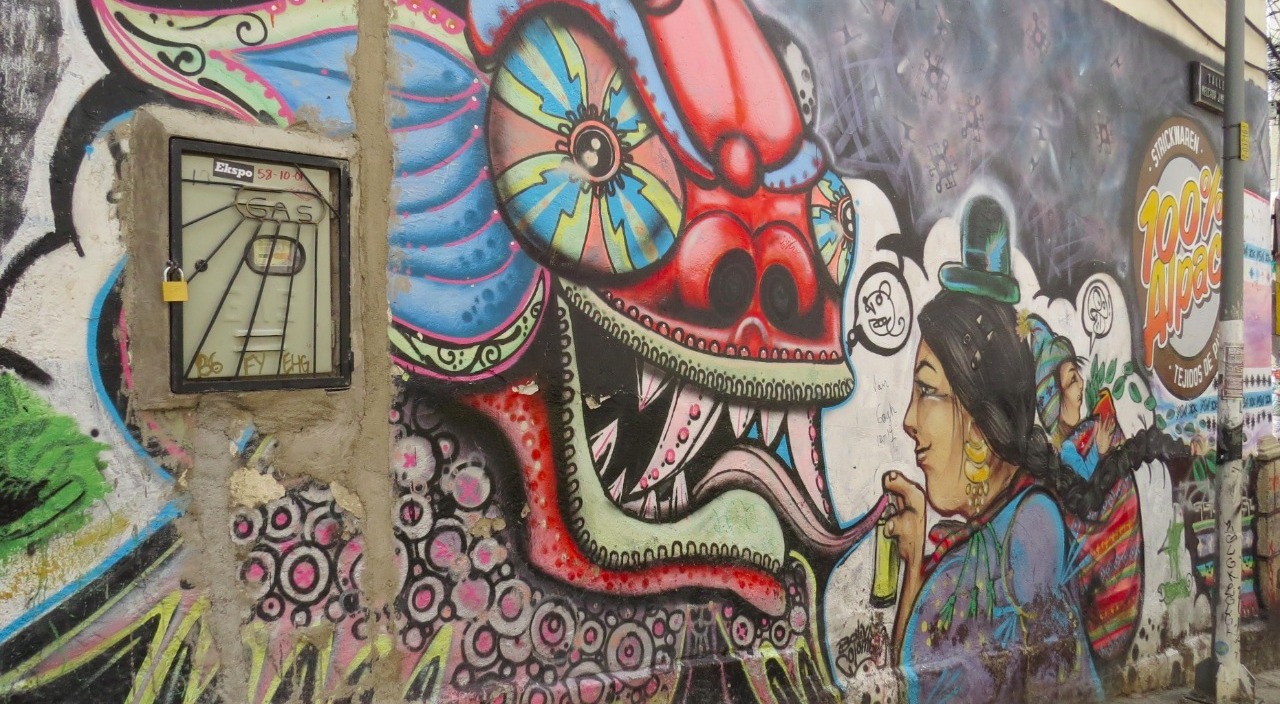
 La Paz, Bolivia
Monday, April 18, 2016


 One afternoon we headed over to where there was a cable car terminal. La Paz has several of these now all built within the last 2 years and more lines planned to open by the end of 2016. As with Medellin in Colombia, they had been built to link the more outlying communities of the city and give them easy, quick access into the city for work. We think it is a marvellous idea and just perfect for cities built in the mountains - and less expensive that a metro system for sure.
 On the Friday (22nd April) Bryan had set off on his "Death Road" bike ride so Jody at a loose end decided to take the Red Cap Walking tour which left Plaza San Pedro every day at 11am & 2:30pm. Too late for the 11am one she joined the group in the afternoon. This tour was the most recommended by all the reviews we found so she was hoping for something good.
We started in San Pedro where - not obvious - stands a very notorious prison. To save us from a lot of typing, here is what Wikipedia tells us about the prison, and indeed Red Cap Tours told Jody about the prison.

 The higher end communities and act similar to gated communities. Each section has a rating that indicates its housing quality. Representatives of the higher end communities usually lock non-residents out around 9:00 p.m. The lower end communities are said to house the drug addicted inmates and are identified as the most dangerous at nighttime where most stabbings occur. Each section operates like a small village or neighborhood, with its own courtyard, restaurants, markets, and services.
The wealthiest area, "La Posta", provides inmates with private bathrooms, a kitchen, and cable television; such cells are sold for around $1,500-1,800 Bolivianos. Wealthier inmates can buy luxury cells that may include three floors and a hot tub. One inmate paid for a second floor extension to be built on his cell, giving him views across the city. However, most of those inside the prison live in cramped conditions with it being common for single-room cells to accommodate five people.
Almost all living sections contain market stalls and places to play games such as billiards, poker, chess, or, in some, video games. The canteen and restaurants are owned and run by the inmates, while other places sell ingredients for those with kitchens to cook for themselves.
One of the larger open areas doubles as a small football pitch, with teams representing each sector regularly competing. Within the walls there is also a hotel for visiting guests, a hospital, and multiple churches.
So not your average prison but very interesting to hear about.
 The tour went onto the market. One of the things we have both wondered about many times whilst in south America, is that each market typically houses about 50 - 100 stalls all selling exactly the same thing. How on earth does everyone make any money?
Well this question was answered for us too.
As a woman managing your household menus for the week, you will shop at the stall where your mother shopped and her mother before her. You will shop with the granddaughter of your grandmother's stall holder and the loyalty gets passed down from generation to generation. And woe betide anyone caught shopping with anyone else!. Apparently the lady on the stall is like your counsellor too. If you are having a bad day you will wander down to the market and share all your problems with your "Chalita". Who needs therapists when you have a Chalita?
Chris & Daniella were a couple of funny people. They made the tour interesting and fun. The stream of information that poured out of them was always interesting too. Often hard on a city walking tour.
Some of the best information came from the Witches Market which is where we ended up.

