Travel journal
A Million-Year-Old Accident - Roquefort
1 August 2026
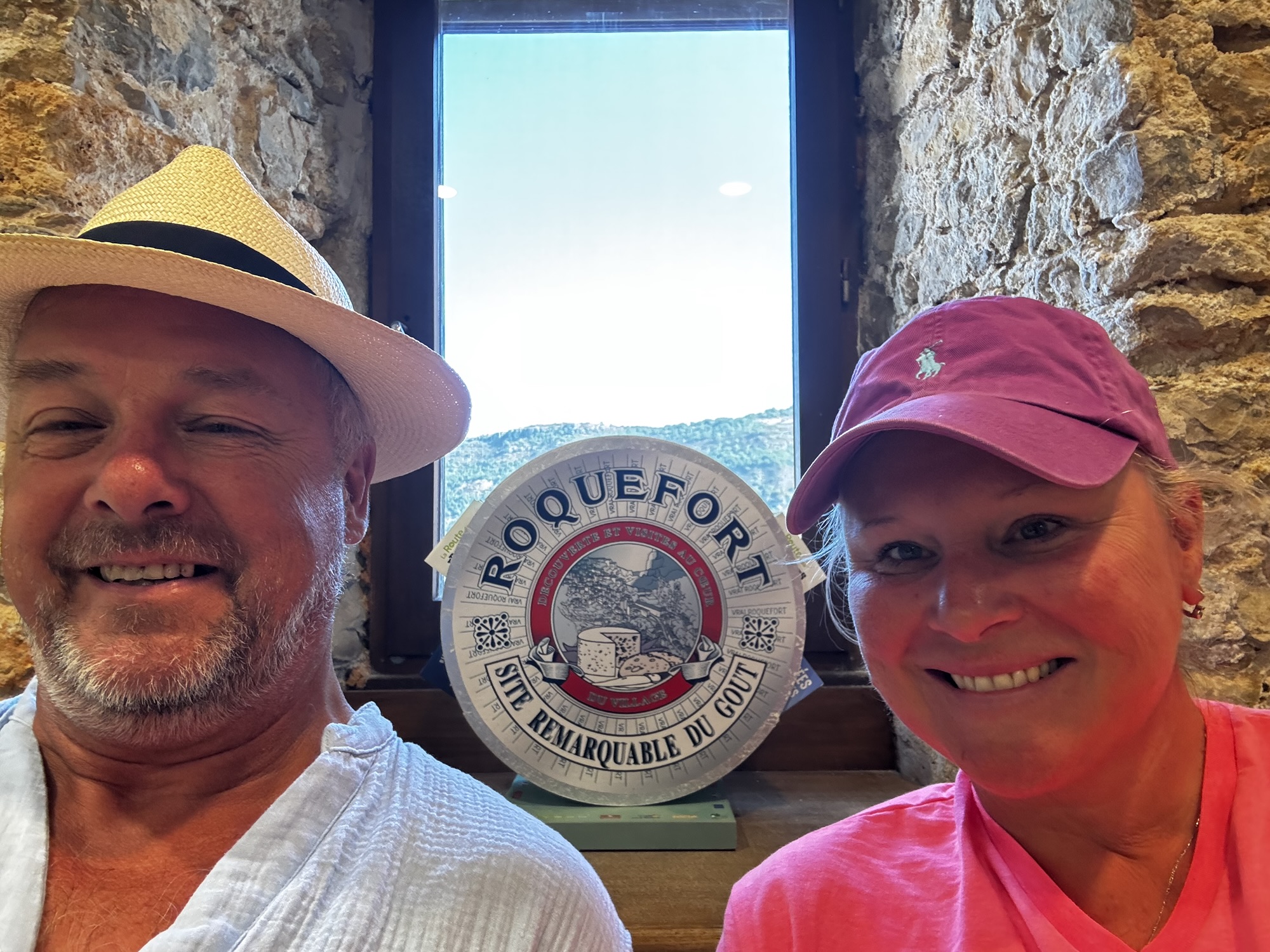
Some places become famous because kings built castles.
Roquefort became famous because an entire mountain fell apart.
Only the French could look at a catastrophic geological collapse and think, “This would be an excellent place to mature cheese.”
After leaving the motorway, the road twisted through steep limestone valleys before the little village of Roquefort-sur-Soulzon appeared beneath the towering cliffs of the Combalou mountain. It was surprisingly small for somewhere whose name appears on cheese boards all over the world.
The air was warm, almost hot, but there was already a faint earthy smell drifting down from the caves.
This was cheese country.
Or, more accurately, mould country.
We parked outside the famous Société caves…
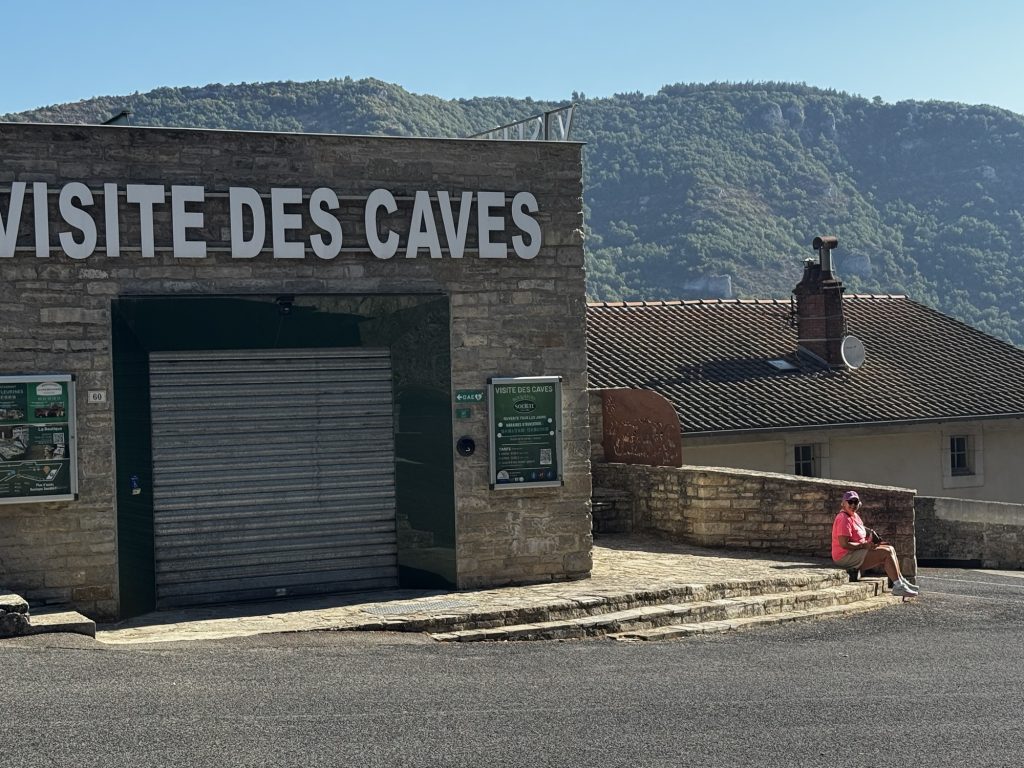
Only to discover the enormous roller shutter was firmly closed.
Dana quietly sat herself on the stone steps.
Not dramatically.
Just with the expression of someone who’d accepted that today’s excursion might already be over.
“I’m sure they’ll open.”
“You said that about the château.”
“They’re probably just getting ready.”
“They’re twenty minutes late.”
“They’re French.”
Dana gave me the look.
Fortunately, the shutter eventually rattled upwards.
Apparently even world-famous cheese likes a lie-in.
Inside, our guide welcomed us.
Entirely in French.
Again.
He handed us an English script, smiled, and launched into what was clearly a passionate explanation lasting several minutes.
The English visitors immediately became experts at reading A4 whilst pretending to watch a film.
I leaned over.
“What did he say?”
Dana shrugged.
“No idea.”
I began to wonder if ChatGPT should start charging admission.
The film explained how, around one million years ago, part of the Combalou mountain collapsed, creating the network of caves that now produce Roquefort.
Anglais.pdf
Nature accidentally built the world’s perfect cheese cellar.
The French simply took advantage.
The deeper we walked, the colder it became.
Outside it was another glorious summer’s afternoon.
Inside it was a constant 10 degrees.
The air felt alive.
Cool, damp and earthy.
It drifted gently through hidden cracks called fleurines, nature’s own air-conditioning system, still doing its job a million years later.
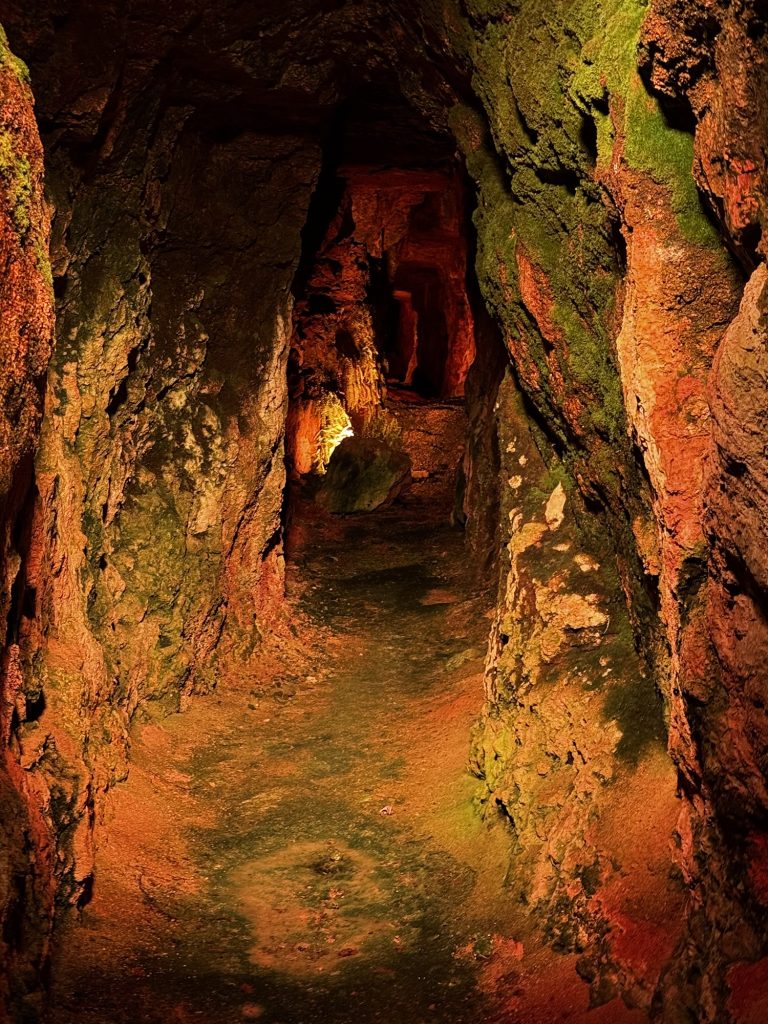
The walls glistened with moisture and patches of vivid green moss clung to the limestone. Warm amber lighting made the caves feel ancient and mysterious.
It felt less like a cheese factory.
Only with considerably more dairy products.
More like we’d wandered into the set of an Indiana Jones film.
The next chamber stopped everyone in their tracks.
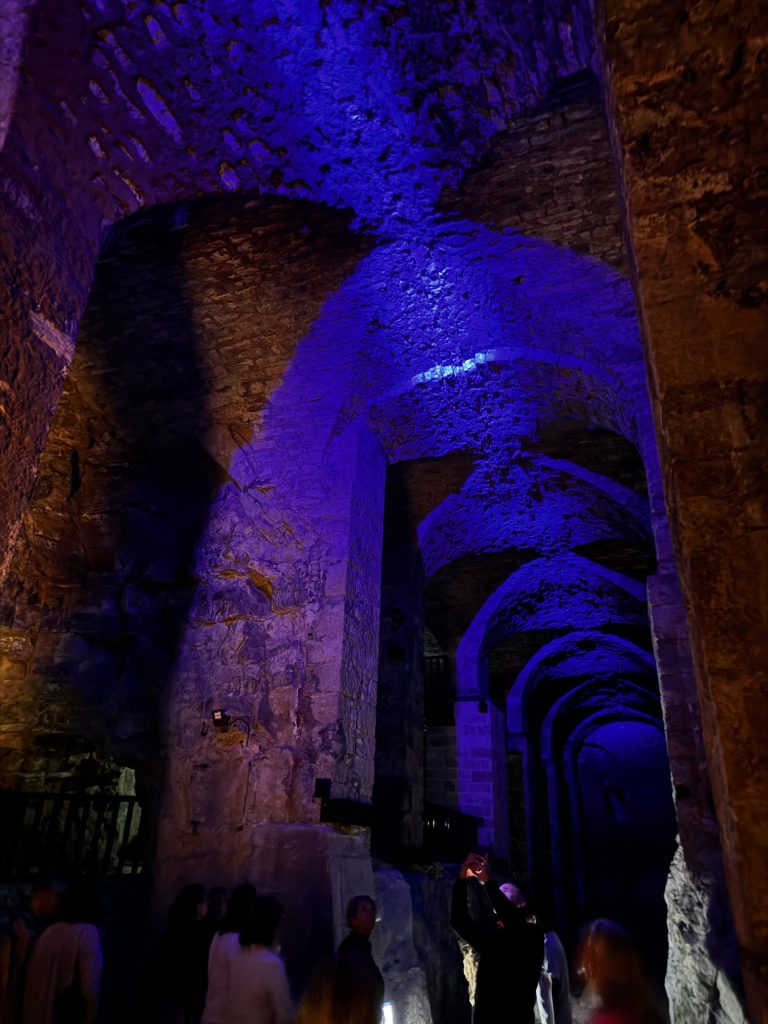
Towering stone arches disappeared into darkness while deep purple lighting washed across centuries-old brickwork.
Nobody spoke.
Partly because it was genuinely impressive.
Partly because the guide was still speaking French and we were all pretending we understood.
One thing the videos did make perfectly clear.
Almost every important job seemed to be carried out by men.
The master ripener.
The cave manager.
The experts.
The women mostly appeared briefly before quietly disappearing into the background.
Dana raised an eyebrow.
“So… the sheep are female.”
“Yes.”
“But all the experts are men.”
I wisely chose not to answer.
Then we finally reached the real stars of the show.
The cheese.
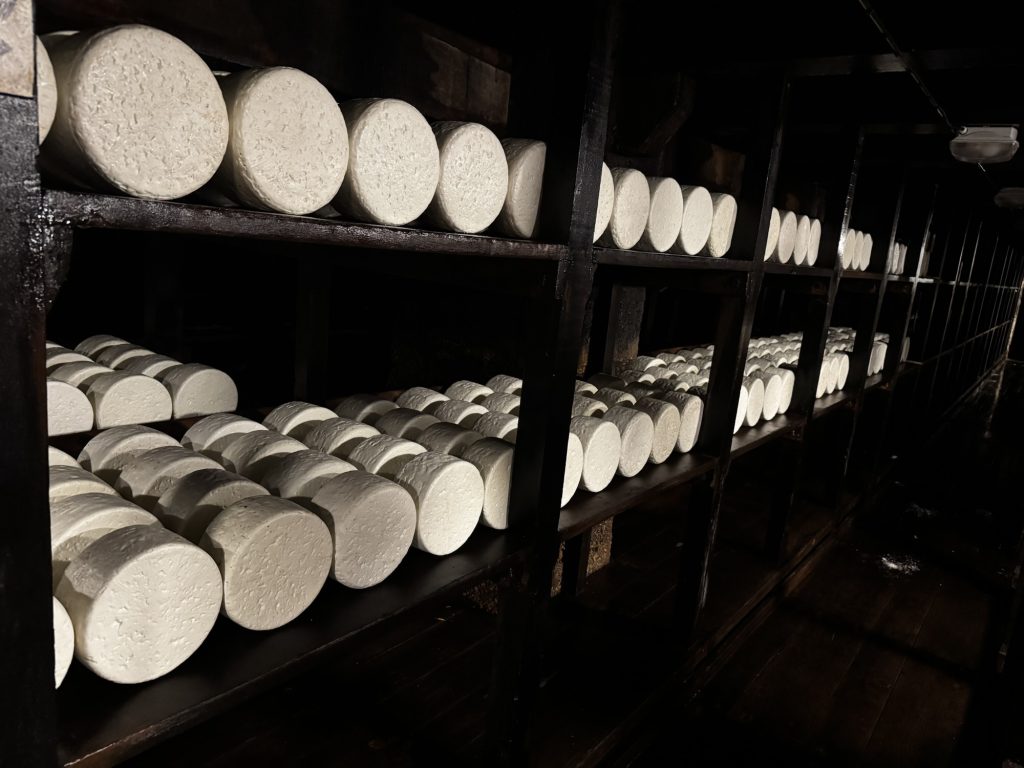
Hundreds upon hundreds of pristine white cheeses sat quietly on wooden shelves.
No blue veins.
No mould.
Just patiently waiting.
Each one would soon be pierced with hundreds of tiny holes before Penicillium roqueforti began spreading through its centre.
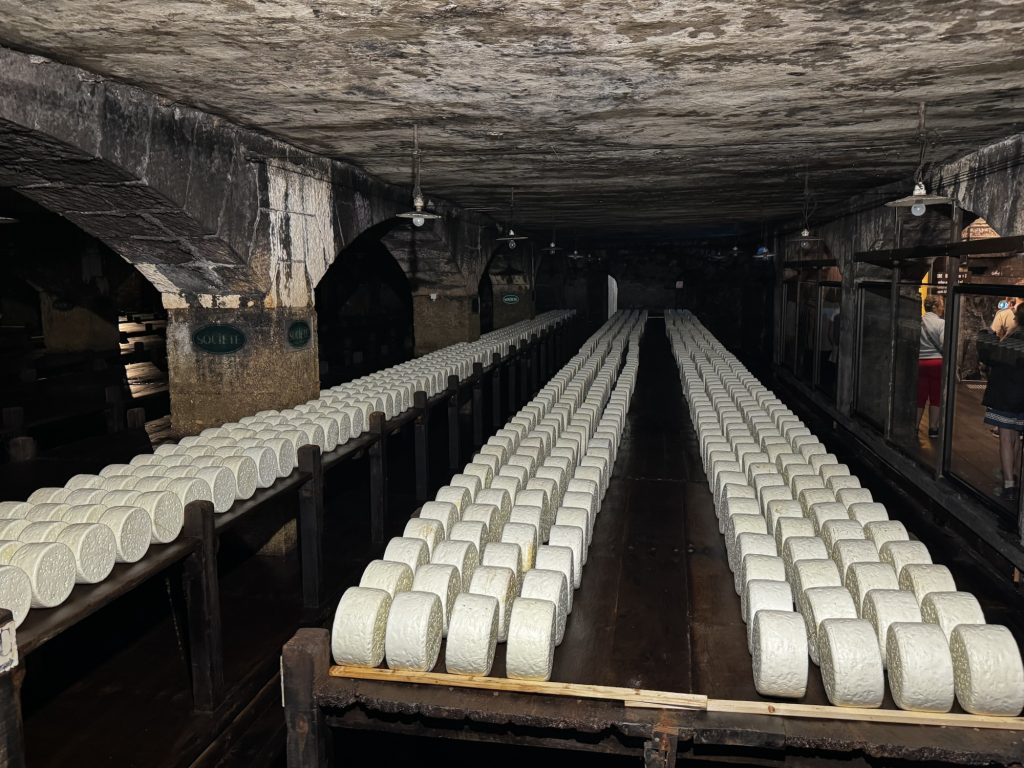
The scale was extraordinary.
Row after row disappeared into the darkness.
Our guide proudly explained this cellar alone could hold around 300,000 cheeses at one time.
I was less interested in the storage capacity.
I was mentally calculating how much Port I’d need.
Eventually our guide stopped beside another information board.
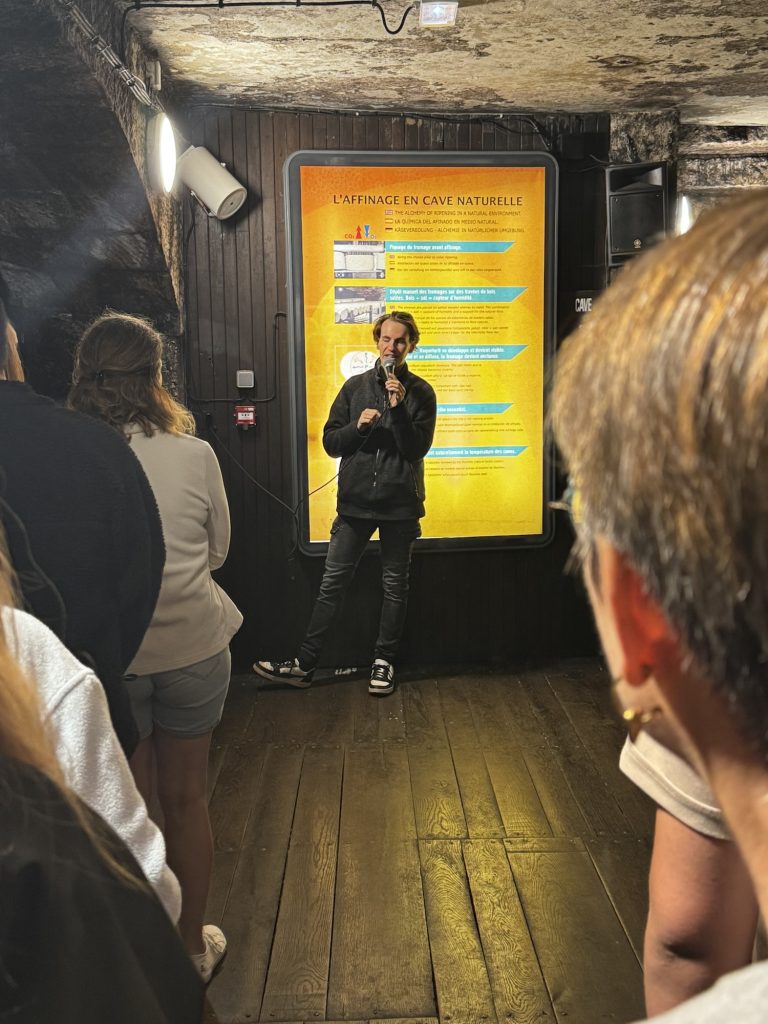
He spoke enthusiastically for another five minutes.
Everyone nodded politely.
I looked around.
Every English-speaking visitor was secretly reading exactly the same leaflet.
Eventually…
The tasting.
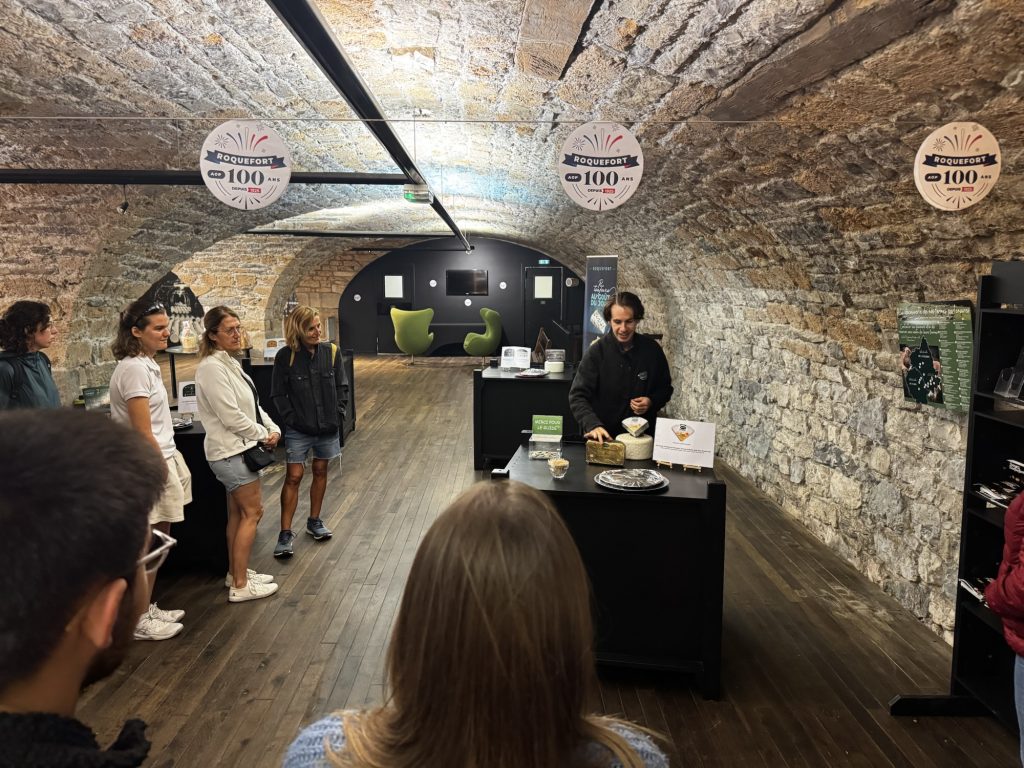
Tiny cubes of Roquefort appeared.
The smell hit first.
Powerful.
Salty.
Earthy.
Magnificent.
I absolutely love Roquefort.
Not supermarket Roquefort.
Proper cave-aged Roquefort.
Creamy.
Sharp.
The sort that makes your fridge smell like someone has hidden a rugby sock behind the butter.
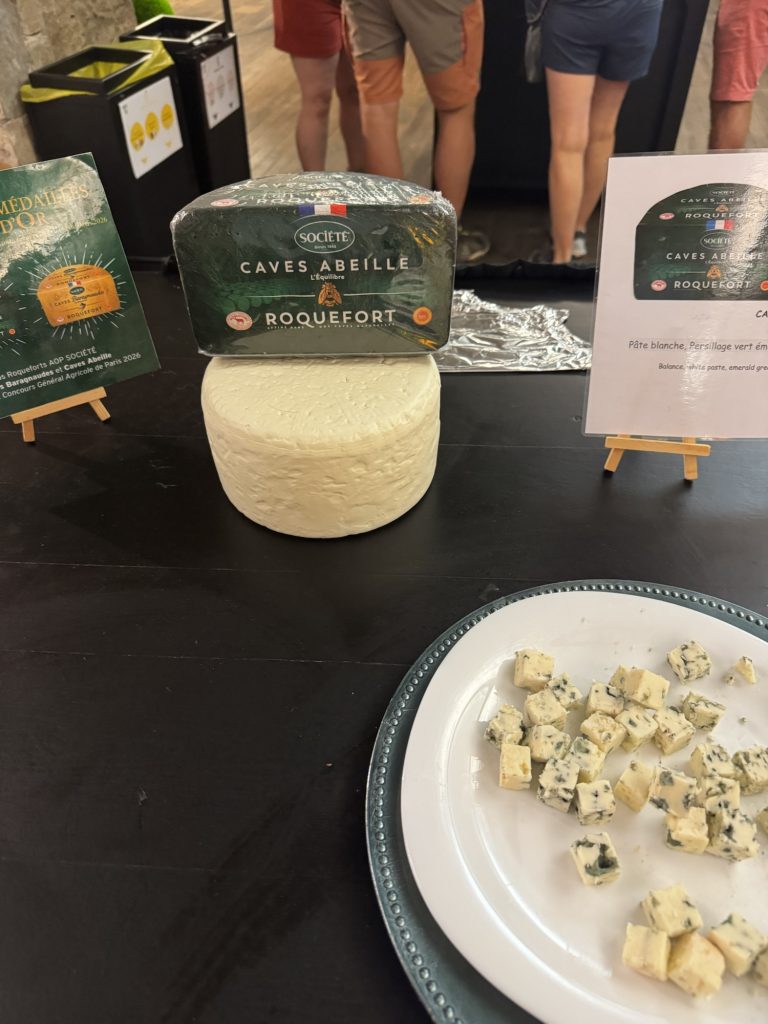
“This one’s very balanced,” the guide explained.
Or at least that’s what I assume he said.
Whatever he actually said, the result was the same.
I immediately wanted to buy some.
Which of course meant…
The gift shop.
“We don’t need that much.”
“We do.”
“How much cheese can two people eat?”
I looked at the basket.
“We’re about to find out.”
By the time we reached the till we’d bought considerably more Roquefort than any sensible couple travelling in a campervan should own.
The cashier smiled knowingly.
She’d seen this happen before.
As we walked back into the sunshine carrying enough cheese to perfume Bandit for the next week, I couldn’t help smiling.
We’d spent the morning learning that one of the world’s greatest cheeses exists because a mountain collapsed a million years ago. We’d discovered nature’s own underground air conditioning, invisible fungi that transform simple sheep’s milk into something extraordinary, and master ripeners who still trust their senses over machines.
Would I recommend the tour?
Absolutely.
Would I recommend they add an English audio guide?
Without question.
Until then, take Dana, a printed leaflet… or Bryan with ChatGPT. Between us, you’ll eventually work out what’s going on.